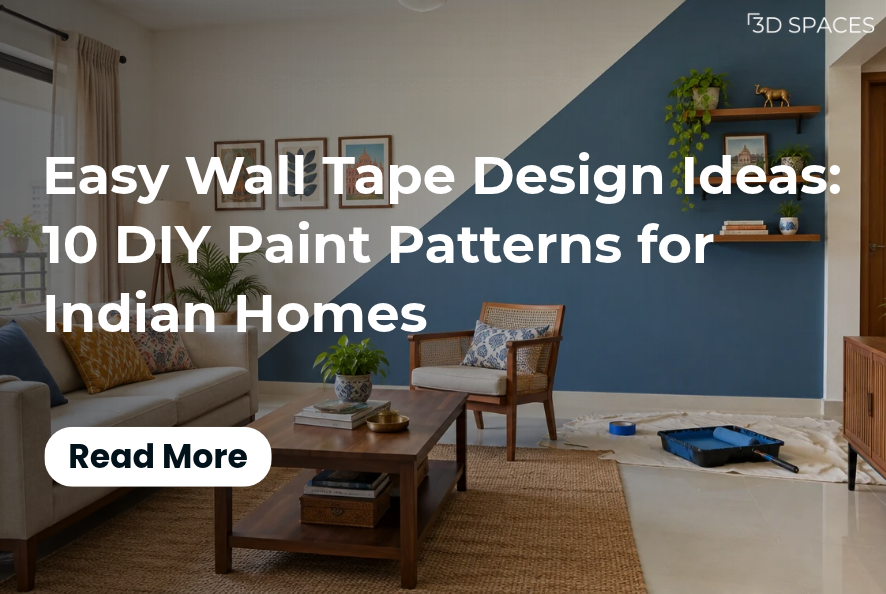
A two-tone tape pattern turns one plain wall into the focus of the room.
The easiest wall tape design is a color block or a horizontal divide. You need painter’s tape, two paint shades and about 3 to 6 hours for one accent wall. I recommend starting with one wall, not the whole room. Use a spirit level, seal the tape edges with your base color and peel the tape slowly at 45 degrees.
What is a wall tape design?
A wall tape design uses tape to mark clean edges on a wall. You paint inside those edges, then peel the tape off. The result is sharp lines, blocks and shapes without a stencil or a professional.
There are two kinds. The first is painter's tape plus paint, which gives a permanent design. The second is stick-on decorative or washi tape, which gives a temporary design. Most of this guide covers the first. The washi option has its own section further down.
Why try a tape design?
I suggest tape designs for three reasons.
Low cost. You pay for tape and two small paint tins, not a painter's day rate.
Low risk. You can test one wall and repaint it if you dislike the result.
High impact. One patterned wall changes how the whole room feels.
What do you need?
| Item | Why You Need It | Approx. Cost (Verify Before Publishing) |
|---|---|---|
| Painter's tape (24 to 48 mm) | Gives crisp edges and peels cleanly | ₹100 to ₹400 per roll |
| Base and accent paint | Two colours, small tins | ₹300 to ₹700 per litre |
| Spirit level or laser level | Keeps lines straight | ₹200 to ₹800 |
| Measuring tape and pencil | Marks the layout | Already at home |
| Small roller and angled brush | Even coats and clean edges | ₹150 to ₹400 |
| Utility knife | Scores the edge before peeling | ₹50 to ₹150 |
A single accent wall usually costs roughly ₹1,000 to ₹3,000 in materials. The total depends on wall size and paint brand.
How do you make a tape design on a wall?
Prepare the wall. Clean dust and grease. Fill cracks and let the wall dry fully.
Paint the base color. Let it dry for 24 hours before you tape over it.
Mark the layout. Use a pencil and a level. Test the pattern on paper first.
Apply the tape. Press the edges down firmly with a card or your thumbnail.
Seal the edge. Brush a thin coat of the base color along the tape edge. Any bleed then matches the base shade.
Paint the accent color. Use two thin coats, not one thick coat.
Peel the tape. Pull slowly at a 45 degree angle once the paint is dry to the touch. If it has fully dried, score the edge with a knife first.
Wait to decorate. Give the paint about 24 hours to cure before you put furniture or art back.
10 easy wall tape design ideas
| # | Design | Best Room | Difficulty | Time |
|---|---|---|---|---|
| 1 | Color Block | Living room | Easy | 4 to 6 hrs |
| 2 | Horizontal Divide | Bedroom, hallway | Easy | 3 to 4 hrs |
| 3 | Floor-Matched Lower Half | Passage, kids' room | Easy | 3 to 5 hrs |
| 4 | Grid or Stripes | Study, office | Medium | 5 to 7 hrs |
| 5 | Half-Round Shape | Entry, kids' room | Medium | 4 to 5 hrs |
| 6 | Mountain View | Bedroom, nursery | Medium | 5 to 7 hrs |
| 7 | Ombre Bands | Bedroom | Hard | 6 to 8 hrs |
| 8 | Geometric Shapes | Kids' room, play area | Medium | 5 to 7 hrs |
| 9 | Triangle Accent | Small room, entry | Easy | 2 to 3 hrs |
| 10 | Subtle Diamonds | Dining, hallway | Hard | 6 to 8 hrs |
1. Color block wall tape design for the living room
What it is: Large rectangles in two or three contrasting shades.
Why it works: Bold blocks give a living room a modern, planned look. A mix of one dark, one mid and one light shade adds depth.
How to do it: Mark two or three rectangles of different sizes. Tape each edge. Paint the lightest block first, let it dry, then tape again for the next shade.
Palette idea: Terracotta, cream and sage green.
Best for: A TV wall or the wall behind the sofa.
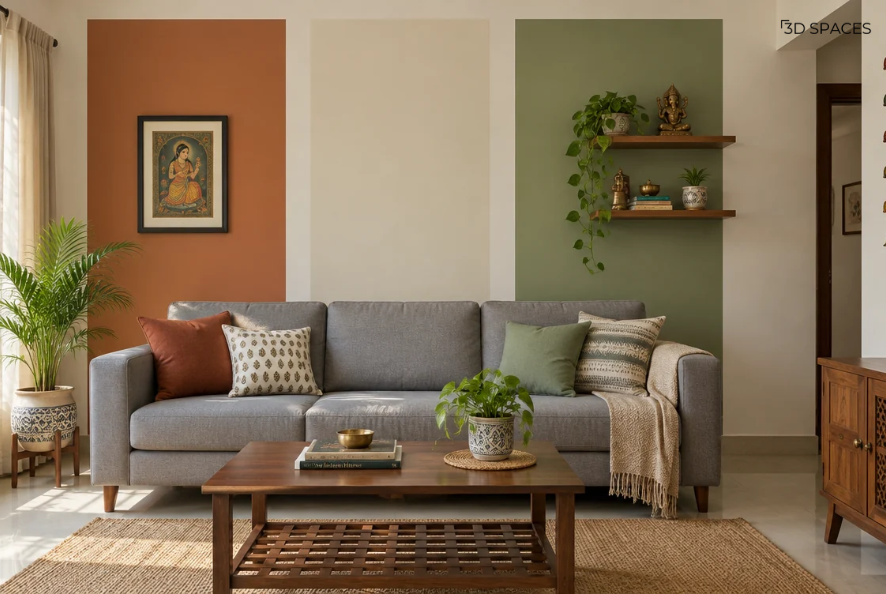
Three color blocks add depth without crowding a living room wall.
2. Horizontal divide
What it is: The wall splits into a top and bottom color along one straight line.
Why it works: The single line is calm and clean. A darker lower half feels cozy. A lighter lower half keeps the room airy.
How to do it: Mark the line at one-third or half the wall height. Run tape along the mark, check it with a level, then paint the lower section first.
Palette idea: Deep teal and soft white.
Best for: Bedrooms and hallways.
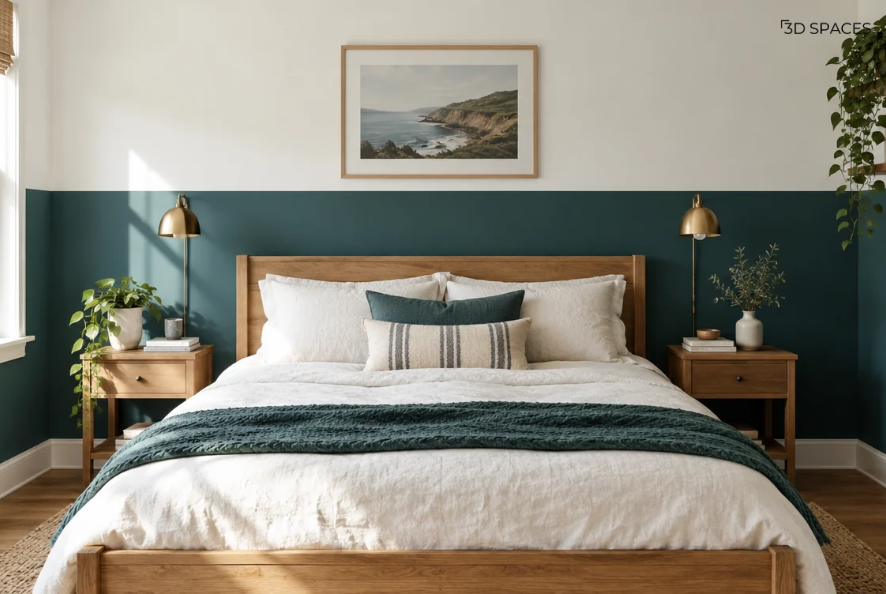
A single horizontal line gives a bedroom wall a calm, tailored look.
3. Lower half painted to match the floor
What it is: Your floor shade carries up the wall to a set height.
Why it works: It ties floor and wall together and hides scuffs in busy areas.
How to do it: Choose a color close to your wood or tile tone. Mark the height with a level around the room, then tape and paint.
Palette idea: Warm brown with a cream upper wall.
Best for: Passages, entryways and kids’ rooms.
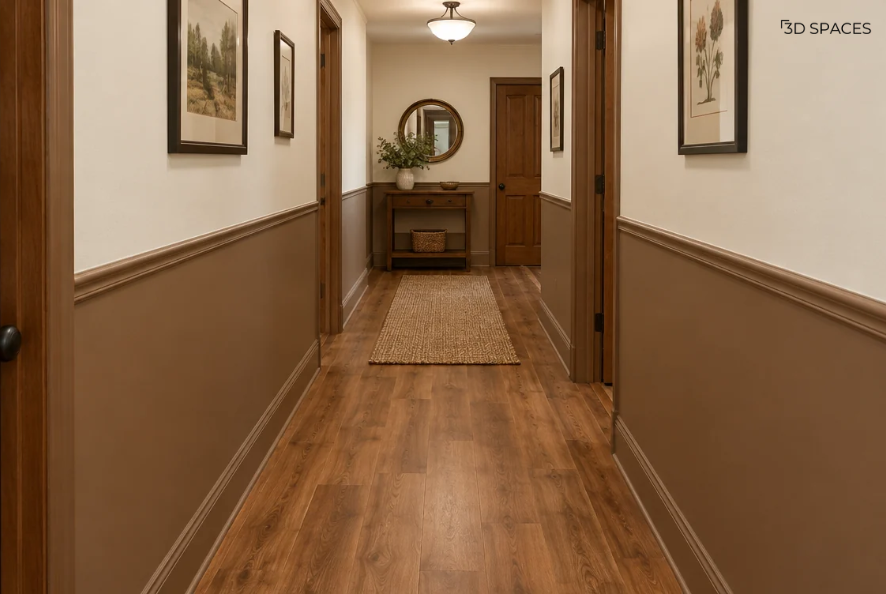
Matching the lower wall to the floor makes a passage feel unified.
4. Grid or stripe wall tape design
What it is: Evenly spaced vertical, horizontal or crossing lines.
Why it works: The pattern feels orderly, so it suits study rooms and home offices. Vertical stripes make a ceiling look higher. Horizontal stripes make a wall look wider.
How to do it: Decide the stripe width, then mark every line with a pencil and level. Tape the stripes you will not paint, and paint the open ones. Use a spacer card for even gaps.
Palette idea: Grey and white, or navy and cream.
Best for: Study rooms and offices.
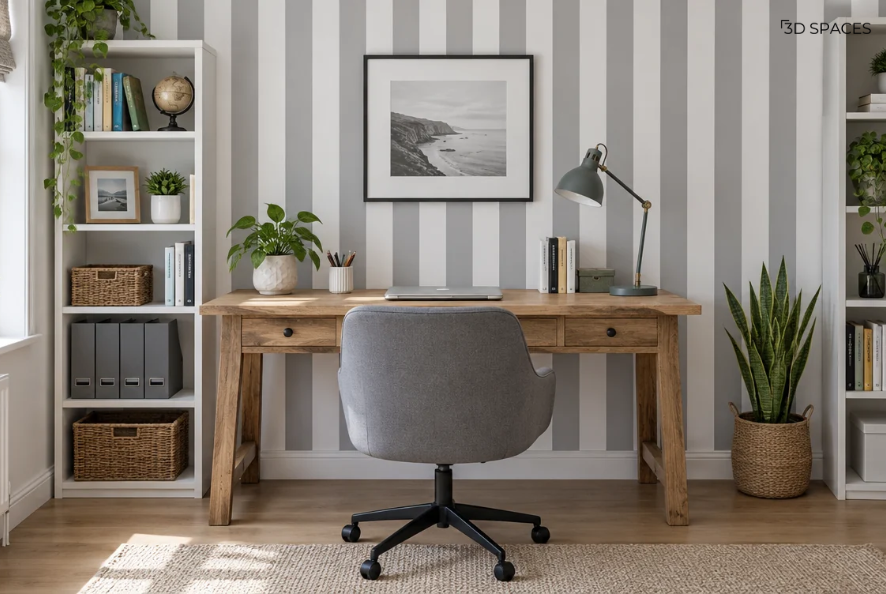
Even stripes give a study wall a clean, focused feel.
Patterns look different on a real wall than on paper. Our AI-powered 3D and VR walkthroughs show how a design looks in your own room before you start.
5. Half-round shape
What it is: A large half-circle or arch painted on the wall.
Why it works: It creates a focal point behind a bed, console or sofa and softens a room full of straight lines.
How to do it: Trace a large plate or use a string and pencil as a compass. Tape along the curve in short pieces and press each piece down. Paint inside the curve.
Palette idea: Mustard yellow on an off-white wall.
Best for: Entryways and kids’ rooms.
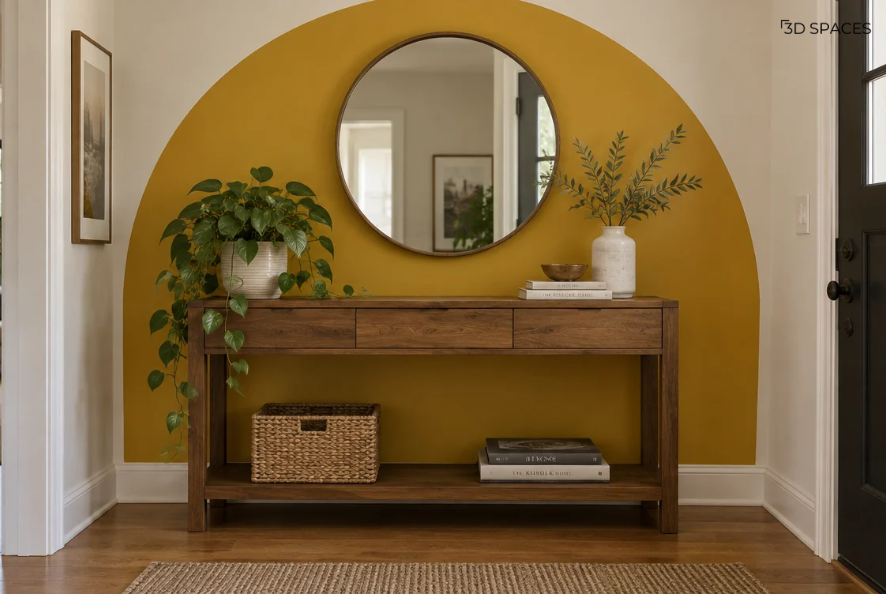
A half-round shape frames a console and welcomes people at the door.
6. Mountain view
What it is: Overlapping triangles in three or four shades that read as a landscape.
Why it works: It makes a simple wall feel like artwork. It suits a bedroom or nursery.
How to do it: Start with the back peaks in the lightest shade. Add the front peaks last so the edges stay sharp.
Palette idea: Blue, grey and white.
Best for: Bedrooms and nurseries.
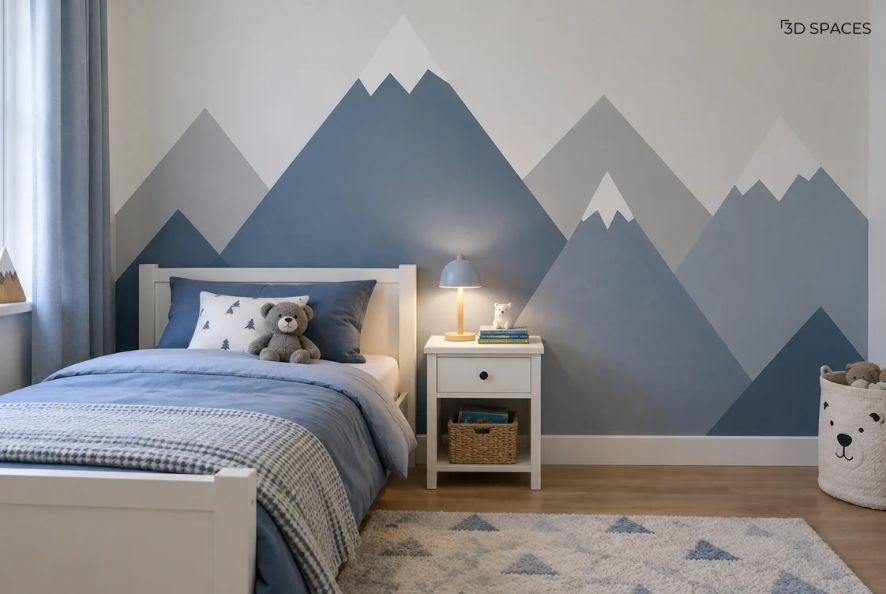
Layered triangles create a mountain scene with just tape and paint.
7. Ombre bands
What it is: One color fades from dark to light in even horizontal strips.
Why it works: The gradual change adds warmth and depth.
How to do it: Tape bands of equal height. Mix your shades by adding white to the base color in steps. Paint alternate bands first, let them dry, then paint the rest.
Palette idea: Deep blue fading to pale blue.
Best for: Bedrooms. This is the hardest design here, so try it after an easier pattern.
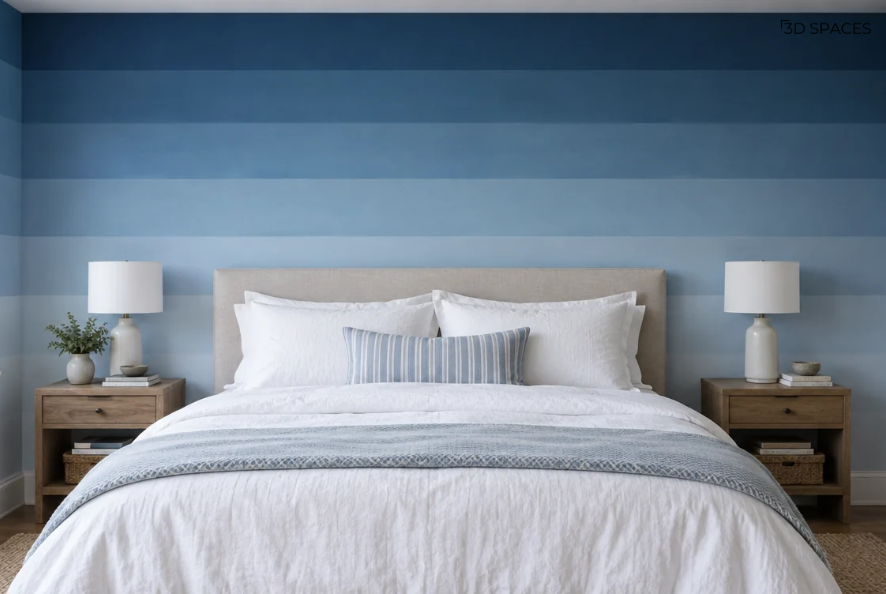
8. Colorful geometric shapes
What it is: Hexagons, triangles or diamonds in a repeating pattern.
Why it works: The shapes add energy. They suit kids’ rooms and play areas.
How to do it: Cut a cardboard template. Trace each shape, tape the edges and paint. Keep the shapes the same size so the pattern reads as intentional.
Palette idea: Yellow, teal and coral.
Best for: Kids’ rooms and play corners.
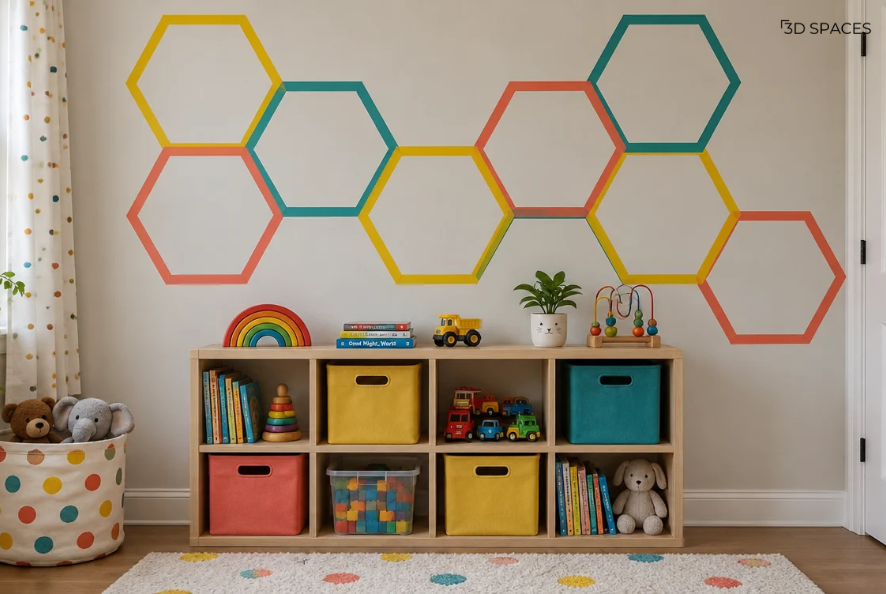
Bright hexagons add playful energy to a kids’ room.
9. Minimalist triangle accent
What it is: One large triangle in a single bold color.
Why it works: It is the quickest design on this list. It adds interest without crowding a small room.
How to do it: Tape one triangle in a corner or behind furniture. Fill it with a single shade.
Palette idea: Navy on white.
Best for: Small rooms and entryways.
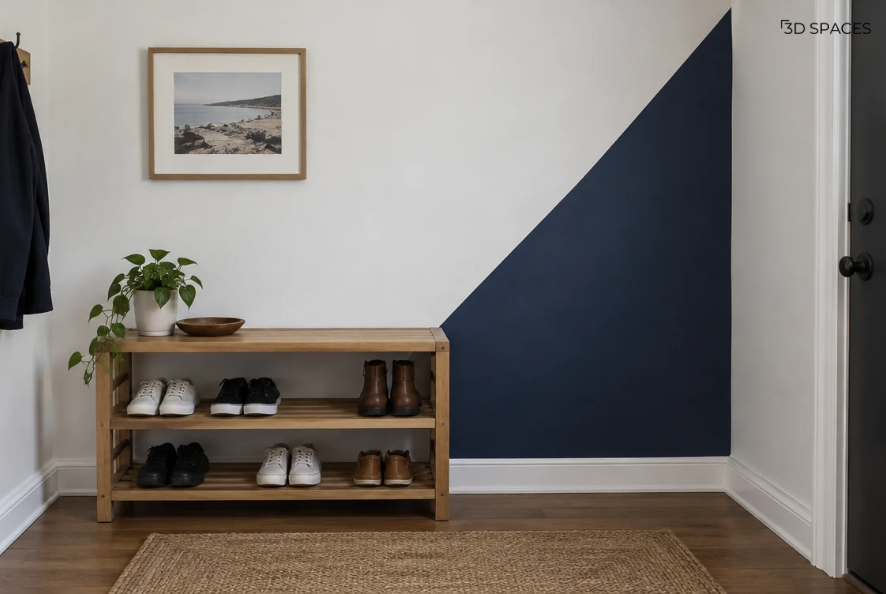
One bold triangle adds interest to a small entry without clutter.
10. Subtle diamond pattern
What it is: Interlocking diamonds in two close shades.
Why it works: Close shades keep the pattern refined and textured rather than loud.
How to do it: Tape a grid at 45 degrees. Paint alternate diamonds in the accent shade. Use a cardboard diamond template so every shape matches.
Palette idea: Two beige or greige tones.
Best for: Dining rooms and hallways.
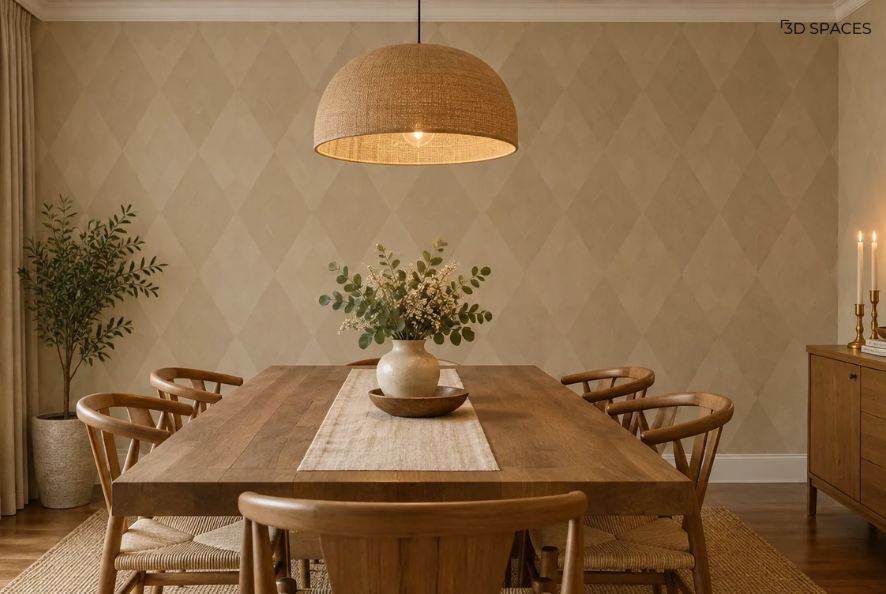
Tone-on-tone diamonds add quiet elegance to a dining wall.
Which design suits which room?
| Room | Best Picks | Why |
|---|---|---|
| Living room | Color block, geometric | Bold patterns suit a large, shared wall |
| Bedroom | Horizontal divide, ombre | Soft lines support rest |
| Kids' room | Half-round, geometric, mountain | Playful shapes and bright shades |
| Study or office | Grid, stripes | Order helps focus |
| Hallway or entry | Triangle, diamonds | Small, striking accents |
For color ideas, see our guides on bedroom wall colour combinations and the best colour for house. For more wall ideas, read easy wall drawing ideas for rooms, creative wall decor ideas for living room and hall and our bedroom back wall design guide.
Picked a pattern but unsure about colors or wall size? Talk to a designer before you buy paint
What mistakes should you avoid?
Using the wrong tape. Cheap masking tape can bleed or tear paint. Choose a painter's tape.
Skipping the seal coat. Paint bleed is the most common problem. Brush the base color along the edge first.
Taping fresh paint too soon. Wait about 24 hours after the base coat. A full cure takes longer.
Peeling too late or too fast. Peel slowly at 45 degrees. Score the edge if the paint has dried hard.
Taping a rough wall. Tape does not seal on heavy texture or flaking paint. Fix the surface first.
Skipping a test. Stick a small piece of tape in a hidden spot to check that it lifts cleanly.
Can you use decorative or washi tape instead?
Yes, for a temporary look. Decorative tape suits rented flats and quick changes. Try a single stripe behind a bed, a frame outline around a mirror or a simple geometric grid.
Test a small patch first. Tape can lift paint that is still fresh or poorly bonded. If your walls were painted recently, wait a few weeks before you apply it.
When should you call a professional?
I suggest professional help in four cases. The wall is large or has heavy texture. The pattern covers several rooms. You want a precise curve or a mural. Or you are renovating and want the wall, lighting and furniture to work as one plan. Our home interior services cover all of these.
About 3D Spaces
3D Spaces is a Gurgaon-based interior design company for homes, offices and commercial spaces. We use patented AI-powered design recommendations and immersive VR walkthroughs, so you can preview your space in 3D before renovation or construction begins. We design modern apartments, luxury villas, offices and retail spaces. You get transparent pricing, on-time delivery and up to 10 years of warranty on interior solution.
An ombre wall design is all about gradually blending colors from dark to light. Use tape to section off parts of the wall and apply different shades to create a gradient effect.
FAQs
-
Easy wall tape design ideas include geometric patterns, minimalist stripes, abstract art, and color-blocking to add style to any space without painting.
-
Painter’s tape is ideal as it provides clean edges and peels off easily without damaging the wall or leaving residue.
-
Masking tape has a thin, easy-to-tear paper backing coated with a pressure-sensitive adhesive that temporarily sticks but removes cleanly.
-
Yes, high-quality wall tapes like painter’s tape and washi tape can be removed without peeling off paint or leaving residue.
-
Use painter’s tape to outline your design on the wall, then fill in the sections with paint before carefully removing the tape for clean lines.
-
Wall tape designs can last for several months to years, depending on the tape quality, wall surface, and environmental conditions.
-
Yes, 3D Spaces offers fully customized wall tape design services to help you create stunning and unique DIY wall decor for any space.