
What Are 3D Tiles? Complete Beginners Guide for 2026
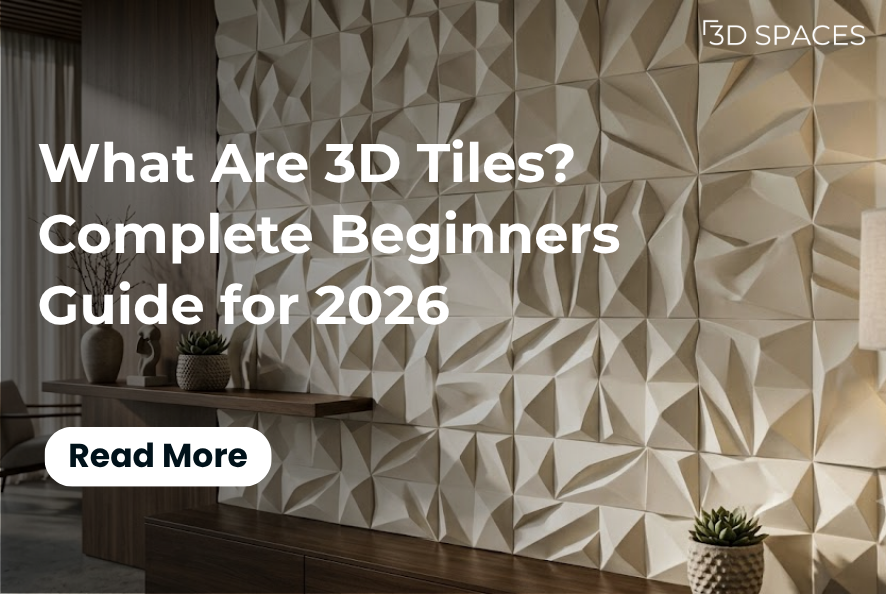
Everything a first-time buyer, homeowner, or interior designer needs to know about 3D wall tiles design in 2026 — what they're made of, where to use them, and what they cost.
Flat walls are easy to build and easy to forget. That's the quiet problem a lot of living rooms, bathrooms, and entryways share in 2026 — the paint is fine, the layout works, but nothing in the room actually holds your eye. 3D tiles solve that without adding a single extra object to the space. A textured, sculpted surface does the work that a gallery wall or an oversized mirror used to do, except it's built into the wall itself. This guide walks through what 3D tiles actually are, the materials they come in, where they work best around a home, and how much you should expect to pay.
What exactly is a 3D tile?
A 3D tile is any tile manufactured with a raised, sculpted, or layered surface, rather than a flat printed one. Where a standard tile relies on colour or a printed pattern to catch the eye, a 3D tile design for wall use relies on real, physical depth. The surface is moulded or pressed so that ridges, waves, cubes, or petals sit above the base of the tile, which means the pattern is created by light and shadow rather than by ink.
That's really the whole idea behind modern 3D wall tiles: as the sun or a lamp moves across the room, the shadows across the tile shift with it. A flat tile looks the same at 8am and 8pm. A 3D tile design for wall installations changes character throughout the day, which is exactly why designers reach for it when a room needs presence without needing more furniture.
Depth comes from the mould, not the print — that's what separates 3D tiles from standard finishes.
Why 3D wall tiles are everywhere right now
Three things pushed 3D tiles into the mainstream this year. First, open-plan homes have fewer walls to work with, so the ones that remain need to carry more visual weight — a single feature wall now does the job three or four walls used to share. Second, manufacturing has caught up: moulded ceramic and porcelain finishes that once needed hand-finishing are now produced at a normal tile factory's scale, which has quietly brought 3D wall tiles price points down to where they compete with premium flat tiles. Third, and simplest — people are tired of rooms that look like everyone else's. A textured feature wall is one of the few upgrades that photographs differently in every home, because the shadow pattern depends entirely on your own light.
What are 3D tiles made from?
Not every 3D tile is built the same way, and the material decides where it should — and shouldn't — go. Here's how the main options compare for anyone shopping for 3D tiles for interior walls.
Ceramic
Light, affordable, and easy to cut. The most common base for 3D wall tiles for bedroom and living-room feature walls where the surface won't face heavy moisture or knocks.
Porcelain
Denser and far less porous than ceramic. The go-to choice for 3D bathroom wall tiles and any wet or high-traffic area, since it shrugs off humidity without warping.
Glass & Glass-Highlighter
Reflective and sharp-edged. Used in small accent bands rather than full walls — a strip of glass 3D tile beside a mirror or vanity adds sparkle without overwhelming the room.
Vitrified & Cement-Based
The toughest option, built to handle weather and abrasion. This is the category behind most 3D exterior wall tiles and street-facing elevations.
Popular 3D tile designs for 2026
2026's most-requested 3D wall tiles design styles have moved away from anything too busy. The pattern needs to read clearly from across the room, not just up close.
Geometric block patterns — repeating cubes or diamonds that read as architectural rather than decorative. Suits studies, hallways, and TV feature walls.
Wave and ripple surfaces — soft, continuous curves that feel calm rather than sharp. A common pick for 3D wall tiles for bedroom headboards.
Stone- and brick-inspired relief — textured surfaces that mimic natural stone cladding without the weight, upkeep, or cost of the real material.
Botanical and floral relief — softer, rounded detailing that suits powder rooms and dining walls where a lighter touch is wanted.
Fluted and linear ribbing — narrow vertical grooves, currently the most requested modern 3D wall tiles look for kitchen islands and reception desks.
Fluted relief is currently the most requested 3D tiles design for wall accents in living spaces.
Where to use 3D tiles around the home
The right texture depends entirely on the room. A pattern that feels dramatic in an entryway can feel restless in a bedroom. Here's a room-by-room shortlist.
Living room
The sofa or TV backdrop
3D wall tiles for living room walls work best behind the main seating or the television, where the texture becomes the room's anchor instead of competing with artwork.
Bedroom
Behind the headboard
Choose a soft, low-relief 3D wall tiles for bedroom pattern — wave or fluted profiles read as calm rather than busy, which matters in a room meant for rest.
Bathroom
Vanity and shower walls
3D bathroom wall tiles in porcelain or glass-highlighter finishes handle humidity well and catch vanity lighting beautifully — just keep deep relief away from constant water contact.
Kitchen
Splashback or island cladding
3D tiles for kitchen wall use suit splashbacks and breakfast-bar cladding better than full-height coverage, since grease and steam collect faster in deep grooves.
Front & exterior
Elevation and entrance
3D tiles for front wall applications give a house number a proper frame. Pair with weather-rated 3D exterior wall tiles for anything facing direct sun or rain.
Hallway & foyer
The first impression
A short run of 3D tiles design for wall texture near the entrance sets the tone for the whole home before a guest even reaches the living room.
3D Tiles vs. Regular Wall Tiles: Which Is Better?
| Factor | 3D tiles | Regular flat tiles |
|---|---|---|
| Best used for | Feature walls, accents, entrances | Full-surface, everyday coverage |
| Visual effect | Depth and shadow, changes with light | Flat and consistent |
| Cleaning | Needs a bit more attention in grooves | Simple, wipe-clean surface |
| Installation | Slower, more adhesive needed | Standard, quicker fixing |
| Where it shines | Living rooms, bedrooms, entryways | Kitchens, bathrooms, floors |
Why 3D spaces are a dream brief for interior designers
Ask any interior designer what's hardest about a flat-wall room and they'll usually say the same thing: there's nowhere for the eye to land without adding more furniture, more art, or more colour. 3D tiles hand designers a tool that solves that problem structurally, before a single sofa or lamp goes into the room.
Also Read: Best Modern Front Wall Tiles Design Ideas for a Stunning Home Elevation
What designers actually get out of it
A built-in focal point. One textured wall replaces the need to compose an entire gallery arrangement or feature piece.
Free lighting design. Raised relief catches ambient and accent light automatically, so a single well-placed spotlight does the work of several fixtures.
Room definition without partitions. A change in wall texture can mark where a living space ends and a dining space begins, without building a wall.
A repeatable signature. Because so many 3D tiles design for wall patterns exist, a designer can develop a recognisable style across projects — geometric for one client, wave-textured for another — without repeating the exact same look twice.
Client-ready photography. Sculpted surfaces render dramatically under both natural daylight shoots and evening interior photography, which matters for portfolio work.
In short, 3D tiles give designers a way to shape a room's atmosphere through the architecture itself, rather than through what gets placed inside it afterward — which is exactly why they've become a standard line item in 2026 mood boards rather than an occasional splurge.
How to choose the right 3D tile for your space
Start with the room's job. A bedroom wants calm, low relief. An entryway or living room can carry bolder geometry.
Match the material to the exposure. Porcelain or vitrified for anything wet or outdoor-facing; ceramic or glass for dry, low-traffic accent walls.
Check the relief depth against your lighting. Deep textures need a light source at an angle to actually cast shadow — directly overhead lighting flattens the effect.
Sample before you commit. A single tile under your own room's light tells you more than a dozen photos of modern 3D wall tiles online.
Get a written per-square-foot quote. Since 3D wall tiles price includes labour that varies by pattern depth, confirm the installed cost, not just the tile cost.
Also Read: How to Choose the Best Ceramic Tiles for Your Home
Frequently asked questions
-
Slightly. The raised surface can trap more dust than a flat tile, so a soft brush or vacuum attachment works better than a flat wipe. In kitchens and bathrooms, choose a shallower relief so grease and moisture don't collect in deep grooves.
-
Yes, as long as they're rated for it. 3D exterior wall tiles and 3D tiles for front wall applications should be vitrified or specifically marked weather-resistant, and installed with exterior-grade adhesive and sealing so relief detail doesn't trap water.Description text goes here
-
It depends heavily on material and relief depth — shallow ceramic patterns sit at the affordable end, while deep-relief porcelain, glass-highlighter, or imported designs cost more. Always request a per-square-foot quote that includes installation, since deeper textures take longer to fix.
-
They work in both — the key is scale. A small bedroom or powder room does better with a single accent panel rather than full wall coverage, so the texture adds interest without shrinking the sense of space.
-
One wall is almost always the right call. 3D tiles are designed to be a focal point — covering every wall in relief removes the contrast that makes the texture stand out in the first place.
-
Geometric, fluted, and stone-inspired reliefs tend to age well because they read as architectural rather than trend-driven. Very literal novelty patterns are the ones most likely to feel dated first.
