
Bedroom PVC Ceiling Design: Types, Cost, and Installation Guide (2026)

A bedroom with a PVC ceiling and cove lighting for a warm, modern look.
A bedroom PVC ceiling design is a false ceiling made from PVC (polyvinyl chloride) panels installed over the original concrete ceiling to improve looks, hide wiring, and add lighting options. It costs less than gypsum or POP, resists moisture, and installs faster, making it one of the most practical choices for Indian bedrooms in 2026.
If you want the short version: for most bedrooms, a plain panel or coffered PVC ceiling with cove lighting gives the best balance of cost, looks, and durability. Below, we break down every design option, real costs, installation steps, safety and acoustic performance, and how PVC compares to gypsum and POP.
What Is a PVC Ceiling and Why Choose It for Bedrooms?
A PVC ceiling is built from lightweight, hollow-core plastic panels that click together and mount onto a metal or wooden frame. Unlike gypsum board, PVC does not absorb moisture, does not develop fungus in humid climates, and needs no painting after installation since panels come pre-finished.
For bedrooms specifically, this matters because:
Moisture resistance protects against monsoon-season dampness, common in most Indian cities.
Lightweight material puts less load on the existing ceiling structure, which matters in older buildings.
Faster installation (2-4 days for an average bedroom) compared to 5-7 days for gypsum or POP.
Lower cost, typically 30-40% cheaper than gypsum false ceilings.
Termite and pest resistance, since PVC does not offer organic material for pests to feed on, unlike some wooden frame options.
What Are the Best PVC Ceiling Designs for Bedrooms?
Plain Panel Design
Flat, uniform PVC panels installed edge to edge. This is the most budget-friendly option and works well in smaller bedrooms where a busy design would feel cramped. It also suits rental properties where landlords want a clean, neutral finish.
You can also explore Bedroom Back Wall Design: 15+ Modern Ideas That Will Change How Your Room Feels

A plain panel PVC ceiling keeps small bedrooms looking clean and uncluttered.
Coffered/Grid Design
A recessed grid pattern that adds depth without the cost of a full multi-level gypsum ceiling. It pairs well with a central pendant light or chandelier and works well in bedrooms with 9-10 foot ceiling heights.
explore: Glass Wardrobe Design: 20+ Stylish Ideas for Modern Bedrooms
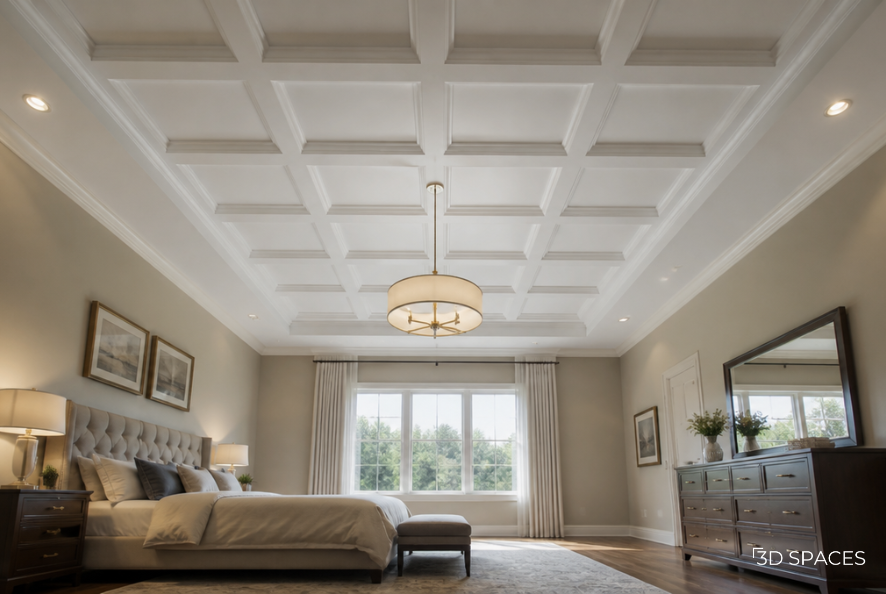
A coffered PVC ceiling grid adds depth without the cost of a multi-level gypsum design.
False Ceiling with Cove Lighting
A layered PVC structure with a hidden LED strip along the edges, creating soft, indirect lighting. This is currently the most requested design for master bedrooms because it makes the room feel larger and adds a hotel-like ambiance. Warm white LEDs (2700K-3000K) work best for bedrooms since they support relaxation rather than alertness.
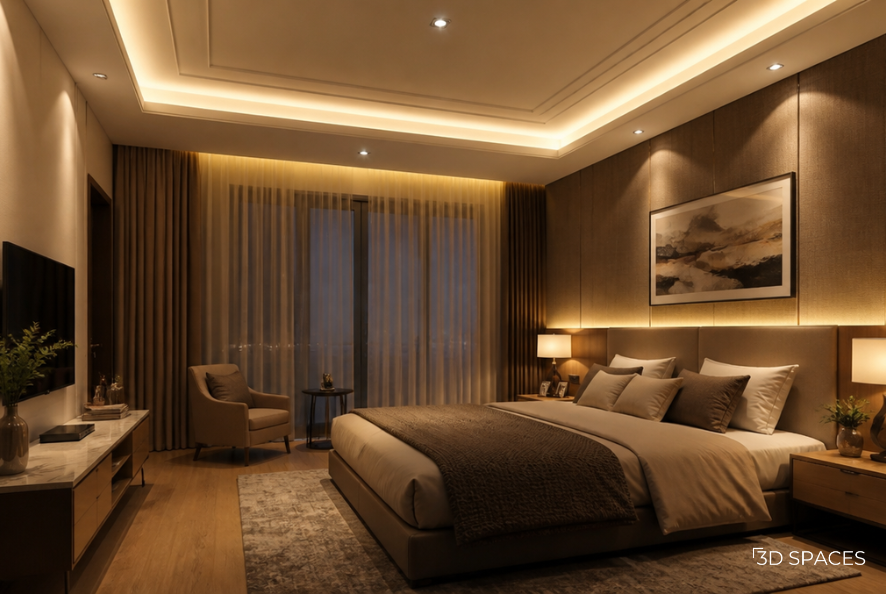
Cove lighting built into a layered PVC ceiling gives the bedroom a warm, hotel-like feel.
3D Textured Panels
PVC panels with embossed geometric or wood-grain textures. These work as a feature ceiling over the bed area rather than across the whole room, keeping costs manageable while adding a statement element.
Also read: 20+ Ceiling Colour Combination Ideas That'll Make You Look Up!
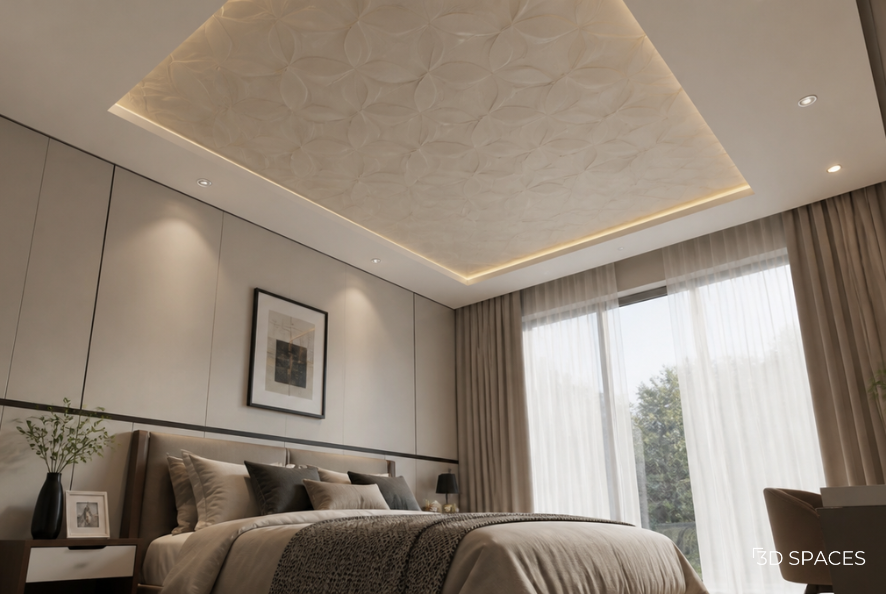
A textured PVC feature ceiling above the bed adds visual interest without covering the full room.
Wood-Finish PVC Panels
A newer option gaining traction in 2026, these panels replicate the look of wood panelling at a fraction of the cost and weight. They work well for bedrooms styled in Scandinavian or Japandi themes, where warm tones are central to the design.
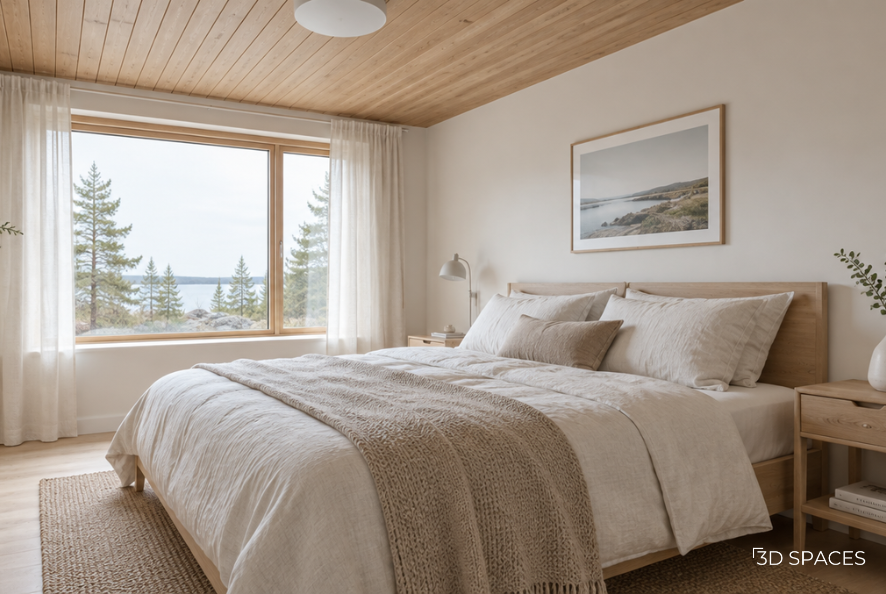
Wood-finish PVC panels bring warm, Scandinavian-inspired tones to a bedroom ceiling.
How Much Does a PVC Ceiling Cost in India?
PVC ceiling costs typically range from ₹55 to ₹90 per square foot, including material and installation labor, depending on the design complexity and city.
| Design Type | Approx. Cost per sq ft |
|---|---|
| Plain panel | ₹55-65 |
| Coffered/grid | ₹70-80 |
| Cove lighting design | ₹80-90 |
| 3D textured feature ceiling | ₹85-100 (feature area only) |
| Wood-finish panels | ₹90-110 |
For a standard 120 sq ft bedroom, total cost typically falls between ₹6,600 and ₹12,000, excluding electrical work for additional lighting points.
What Factors Affect the Final Cost?
Panel thickness and quality: Thicker, branded panels (8mm-10mm) cost more but resist warping better over time than thinner budget panels.
Labor rates by city: Metro cities like Mumbai, Delhi, and Bengaluru typically charge 15-20% more for installation labour than Tier 2 cities.
Frame material: A galvanized steel frame costs more upfront than wood but lasts longer and resists moisture better, reducing long-term maintenance cost.
Electrical additions: Cove lighting, spotlights, or a ceiling fan cutout add ₹1,500-4,000 depending on the number of points.
Room shape: Irregular room shapes or ceilings with existing beams increase labour time and cost compared to a simple rectangular room.
How Is a PVC Ceiling Installed?
Measurement and design finalisation — the installer measures the room and marks the ceiling drop height (usually 6-10 inches from the original ceiling).
Frame installation — a metal or wooden grid is fixed to the original ceiling using screws and anchors.
Wiring and lighting setup — electrical wiring for lights or fans is routed through the frame before panels go up.
Panel fixing — PVC panels are clicked into the frame, starting from one corner and working across the room.
Edge finishing — border trims and cornices are added to hide gaps between the panel and the wall.
Final inspection — the installer checks for gaps, alignment, and lighting function before handover.
Most bedrooms take 2 to 4 days from start to finish, depending on design complexity. Simple plain panel ceilings can sometimes be completed in a single day.
Is PVC Ceiling Safe? Fire Behavior and Health Considerations
This is a question many buyers research but few blogs answer directly. Standard PVC ceiling panels are self-extinguishing, meaning they do not sustain a flame once the source of ignition is removed, unlike wood or certain fabric-based ceiling materials. However, PVC does release dense smoke and hydrogen chloride gas when it does burn, which is a genuine consideration in enclosed bedroom spaces.
For bedrooms specifically:
Choose panels certified for fire retardancy (check for BIS or equivalent certification from the manufacturer).
Avoid placing high-wattage halogen fixtures directly against PVC panels, since sustained heat exposure can warp or discolor the material over time.
LED lighting is the safer choice for cove and cutout lighting in PVC ceilings, since it generates far less heat than halogen or incandescent options.
Does a PVC Ceiling Affect Sound Insulation?
Sound performance is rarely discussed in PVC ceiling guides, but it matters for bedrooms, which are the most noise-sensitive rooms in a home. PVC ceilings, on their own, offer minimal soundproofing since the hollow-core panels do not absorb sound the way denser materials do.
If sound insulation from the floor above is a concern, ask your installer about adding a mineral wool or rockwool layer between the original ceiling and the PVC frame. This adds ₹15-25 per square foot but noticeably reduces airborne noise transfer, which gypsum ceilings handle slightly better by default due to their denser board structure.
PVC vs Gypsum vs POP Ceiling: Which Is Better for Bedrooms?
For bedrooms in humid or coastal cities, PVC is generally the better choice. For buyers prioritising intricate multi-level designs and willing to spend more, gypsum offers greater flexibility.
| Factor | PVC | Gypsum | POP |
|---|---|---|---|
| Cost per sq ft | ₹55–90 | ₹80–120 | ₹70–110 |
| Moisture resistance | High | Low to moderate | Low |
| Installation time | 2–4 days | 5–7 days | 6–8 days |
| Design flexibility | Moderate | High | High |
| Sound insulation | Low (unless upgraded) | Moderate | Low to moderate |
| Maintenance | Low (wipeable) | Moderate (needs repainting) | Moderate (prone to cracks) |
| Lifespan | 15–20 years | 10–15 years | 8–12 years |
Does a PVC Ceiling Affect Resale or Rental Value?
For rental properties, a PVC ceiling is often the more practical choice for landlords since it holds up better against tenant turnover, requires no repainting between tenants, and resists the moisture damage that can make a gypsum ceiling look worn within a few years.
For owner-occupied homes being prepared for resale, buyers in the mid to premium segment sometimes perceive gypsum or POP ceilings with elaborate detailing as a stronger design statement. A well-executed PVC ceiling with cove lighting, however, closes most of that perception gap at a lower renovation cost, making it a reasonable middle ground for owners who want visual impact without over-investing before a sale.
How Do You Maintain a PVC Ceiling?
PVC ceilings need minimal upkeep. Wipe panels with a dry or slightly damp cloth every few months to remove dust. Avoid harsh chemical cleaners or abrasive scrubbers, which can dull the surface finish or scratch embossed textures. Check the frame and joints once a year for any loosening, especially in ceiling fan installations where vibration can affect fittings over time. If a panel becomes discolored or warped due to prolonged heat exposure, individual panels can usually be replaced without redoing the entire ceiling, which is a practical advantage over gypsum.
How Can 3D Spaces Help With Your Bedroom PVC Ceiling?
AI-powered design recommendations: 3D Spaces with it’s patented AI technology suggest the panel style, layout, and lighting setup best suited to your bedroom's size, ceiling height, and existing decor.
VR walkthroughs let you experience the cove lighting, coffered pattern, or textured panel design in your actual room dimensions before any work begins, so there are no surprises after installation.
Transparent, itemised pricing breaks down panel cost, framing, labour, and electrical work upfront, so the final bill matches the quote.
Up to 10 years of warranty on the ceiling installation gives you coverage well beyond what most local contractors offer.
Frequently Asked Questions
-
Yes. PVC ceilings resist moisture, need low maintenance, and cost less than gypsum or POP, making them well-suited for bedrooms, especially in humid regions.
-
A well-installed PVC ceiling typically lasts 15 to 20 years, longer than gypsum or POP ceilings under similar conditions.
-
Yes. PVC ceilings cost roughly 30-40% less than gypsum false ceilings for the same design complexity.
-
Not when designed well. Coffered patterns, cove lighting, and textured panels give PVC ceilings a premium look comparable to gypsum, at a lower cost.
-
Yes. PVC panels mount onto a frame attached to the original ceiling, so no demolition is needed.
