
Traditional vs Modern Indian Interior Design: Which One Suits Your Delhi NCR Home?
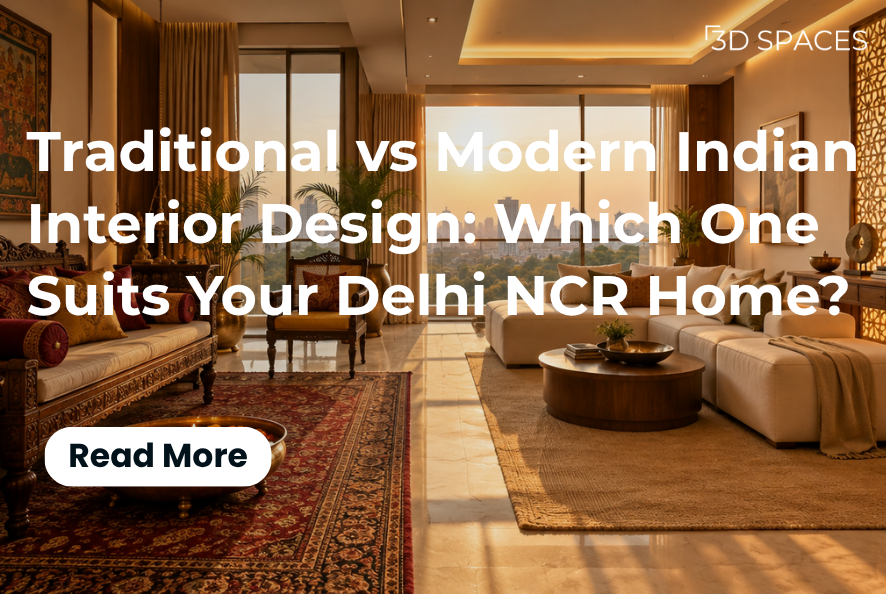
Traditional warmth meets modern clarity in a Delhi NCR living room.
The short answer: choose traditional Indian interior design if you want warmth, craft, heritage and culture. Choose modern Indian interior design if you want clean lines, bright light and easy upkeep. Most Delhi NCR homeowners we meet end up with a blend of both.
We see this question in almost every consultation. Some homeowners in Gurgaon, Noida, Faridabad and Delhi know the answer right away. Others only start asking after they get possession. This guide gives you a direct answer and a simple way to decide.
Here is what you will get:
What: a clear definition of both styles.
Why: how the choice affects cost, comfort and resale value.
How: a step-by-step method to pick or blend styles for your own home.
What Is Traditional Indian Interior Design?
Traditional Indian interior design uses handcrafted materials, rich colours and cultural motifs to create a warm, layered home. Think carved wood, brass, silk, block prints and symmetry.
Common features include:
Carved sheesham or teak furniture.
Jewel tones like maroon, mustard, emerald and indigo.
Brass lamps, diyas and urlis.
Jharokhas, arches and jali screens.
Handwoven rugs, bandhani and ikat textiles.
Traditional Indian design suits people who want a home that feels rooted and personal, not just decorated with ethnic objects. I agree. The style works when every piece has a reason to be there.
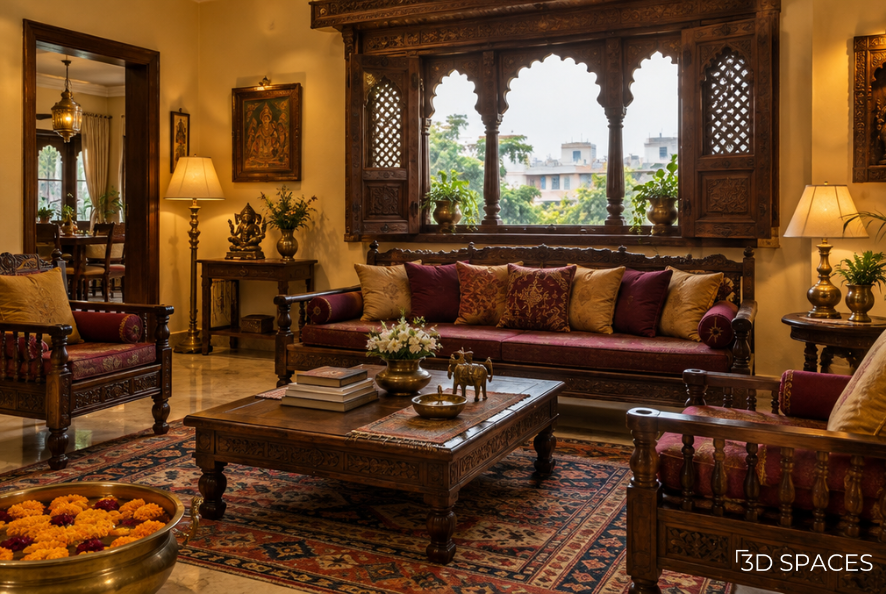
A traditional Indian living room with carved wood, brass and jewel tones.
Not sure which style fits your floor plan? Share your layout and we will show you both styles in 3D before you spend a rupee.
What Is Modern Indian Interior Design?
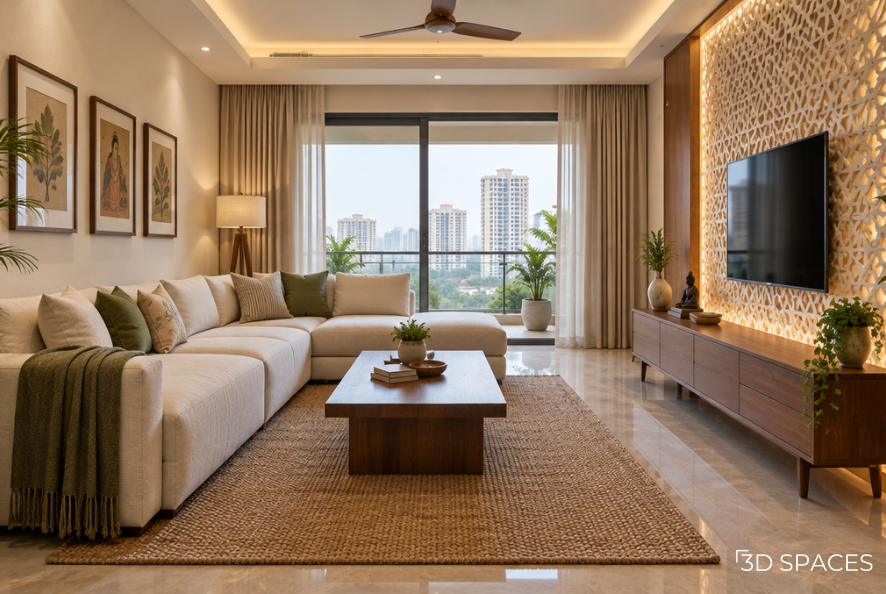
A modern Indian living room with a single jali accent wall.
Modern Indian interior design uses clean lines, neutral colours and smart storage, with a few Indian elements added as accents. The home feels light and uncluttered, but it still feels Indian.
Common features include:
Neutral walls like ivory, beige, sage and warm grey.
Low-profile furniture and modular storage.
Layered cove and spot lighting.
One Indian feature wall, such as a jali panel or a handpainted mural.
Materials like engineered wood, quartz, glass and metal.
AND Academy describes this approach as a good fit for homeowners who want Indian character without covering every wall. In practice, modern Indian design is the most common request we get in Delhi NCR apartments.
Traditional vs Modern at a Glance
| Feature | Traditional Indian | Modern Indian |
|---|---|---|
| Overall look | Rich, layered, ornate | Clean, light, minimal |
| Colours | Maroon, mustard, emerald, indigo | Ivory, beige, grey, sage |
| Materials | Solid wood, brass, stone, silk | Engineered wood, glass, quartz, metal |
| Furniture | Carved, heavy, statement pieces | Slim, modular, storage-led |
| Lighting | Brass lamps, chandeliers, diyas | Cove, profile and spot lights |
| Decor | Murals, textiles, idols, artefacts | Few art pieces, plants, one accent wall |
| Upkeep | Higher (polish, dusting, brass care) | Lower (wipe-friendly surfaces) |
| Budget | Often higher due to craftsmanship | Often lower and easier to scope |
| Best for | Large homes, joint families, heritage lovers | Compact flats, young families, rental value |
Also read about bedroom PVC ceiling design.
Which Colours and Materials Work in Delhi?
Delhi has extreme summers, foggy winters and heavy dust. That changes what you should choose.
For traditional homes:
Use sheesham or teak with a protective PU finish.
Keep brass for accents, since it needs regular polishing.
Pick Kishangarh marble or kota stone for cool floors in summer.
For modern homes:
Pick laminate or quartz for surfaces that wipe clean.
Use light curtains over blackout layers to control heat and glare.
Choose matte finishes, which hide dust better than high gloss.
Houzz India featured homes that give IPS flooring, a traditional cement-based finish, a modern twist with blue and black tones. That is a smart way to keep craft without heavy upkeep.
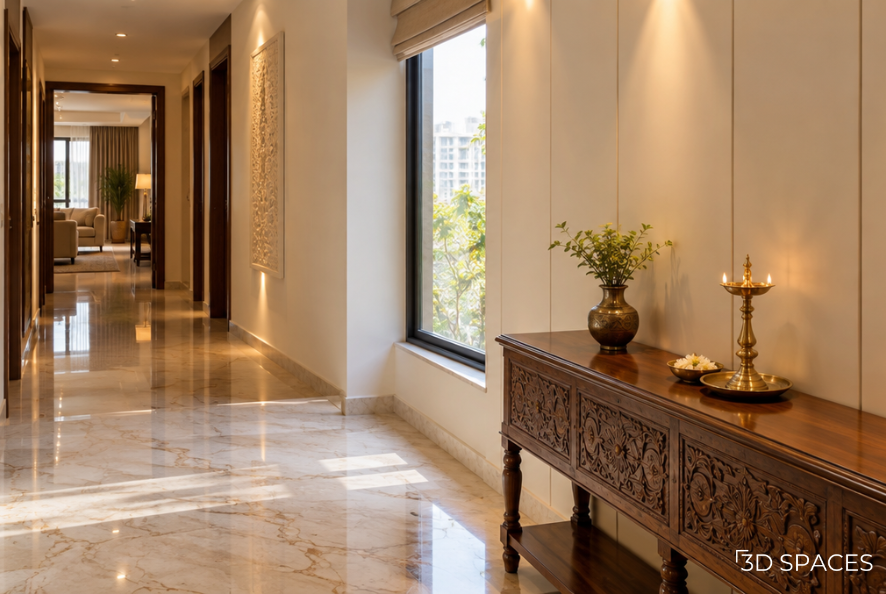
Marble flooring and a carved console blend both styles in a Delhi entrance.
Want colours and materials picked for Delhi heat and dust? Talk to a designer who plans for NCR conditions from day one.
How Do Layouts and Furniture Differ?
Traditional layouts separate rooms by purpose, with a formal drawing room, a dining room and a pooja room. Furniture is large and fixed.
Modern layouts open up space. The living, dining and kitchen areas flow together. Furniture is modular and often built in.
For Delhi homes, I use this simple rule:
Under 1,000 sq ft: go modern. You need storage and open floor space.
1,500 sq ft and above: you can afford traditional zones, like a formal sitting area.
Any size: keep the pooja room traditional. It is the heart of many NCR homes.
For small spaces, our guide on study table designs for small rooms shows how modern built-ins save floor area.
Which Style Suits Your Home Type?
Builder floor
Builder floors often have good ceiling height and big rooms. Both styles work. A traditional drawing room with a modern kitchen and bedrooms is a popular combination.
DDA flat or older apartment
These often need preparation work before interiors begin, such as checking walls, wiring and plumbing. An Interior Company guide on Delhi costs notes that builder floors and older DDA flats usually need site preparation first. Go modern and keep traditional touches for accents.
High-rise in Gurgaon, Noida or Greater Noida
Ceilings are lower and floor plans are fixed. Modern design with Indian accents works best. A plus minus POP design for the hall keeps the ceiling clean without losing character. You can also read about false ceiling light.
Villa or independent house
You have room for full traditional elements like courtyards, wood panelling and arches. A fusion approach still keeps the home easy to run.
What About Vastu?
Vastu works with both styles. It governs placement, not decoration.
Keep these points in mind:
Place the pooja room in the north-east.
Keep the kitchen in the south-east where possible.
Avoid heavy furniture in the centre of the living room.
Modern layouts can follow Vastu easily when planned early. If you are placing furniture, see our guide on bed position according to Vastu.
While you are at it you can also read about the bed position according to Vastu.
How Much Does Each Style Cost in Delhi?
Costs depend on materials, size and finish. Here is a snapshot from published sources.
| Detail | Estimate |
|---|---|
| Average Delhi NCR spend on interiors | ₹5.8 lakh per home, or ₹580 per sq ft |
| 2 BHK interior cost in Delhi (2026) | ₹1,000 to ₹1,200 per sq ft |
| 3 BHK interior cost in Delhi (2026) | ₹1,200 to ₹1,700 per sq ft |
Magicbricks reports that Delhi-NCR homeowners spend an average of ₹5.8 lakh per home on interiors, at ₹580 per sq ft against ₹560 nationally. Interior Company estimates 2 BHK projects in Delhi at ₹1,000 to ₹1,200 per sq ft and 3 BHK projects at ₹1,200 to ₹1,700 per sq ft.
Traditional work usually costs more when it involves hand carving, solid wood and custom metalwork. Modern work costs less when you use modular units. A fusion home lets you spend on a few hero pieces and save on the rest.
Magicbricks also notes that modern interiors can fetch up to 70 percent higher resale value and about 45 percent higher rental income. Treat this as a market indicator, not a promise. Your result depends on location and build quality.
How Do I Blend Both Styles?
Indian fusion interior design mixes modern layouts with traditional details. Decolide suggests keeping modern silhouettes and adding traditional detailing. Here is the 5-step method I use.
Start modern. Choose a neutral base for walls and floors.
Pick one traditional hero. Examples are a carved door, a jali partition or a brass chandelier.
Repeat it twice. Echo the material or colour in two smaller items, like cushions and a tray.
Zone it. Keep traditional elements in the drawing room and pooja room. Keep bedrooms and kitchens modern.
Preview before you build. Check proportions and lighting in 3D.
Houzz India shows how designers merge modern minimalism with ethnic intricacy, such as a bedroom that keeps a clean layout and adds one rich textile feature.
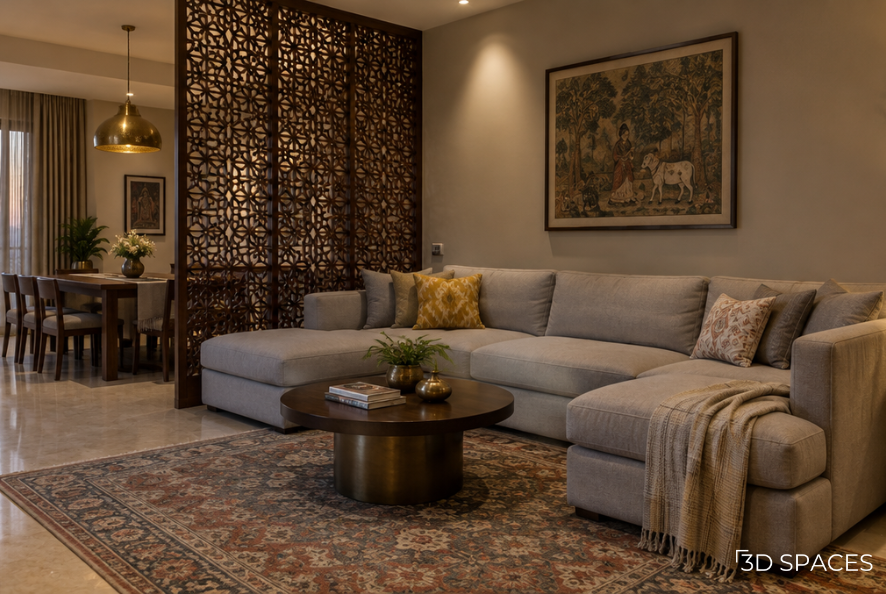
A jali partition adds Indian character to a modern open-plan home.
Ready to blend both styles without the guesswork? Get a free 3D walkthrough of your own floor plan before work begins.
What Mistakes Should I Avoid?
Too many hero pieces. One statement item per room is enough.
Heavy furniture in small rooms. It blocks light and movement.
Ignoring dust and heat. Choose finishes that clean easily and handle Delhi weather.
Copying a photo exactly. A Mumbai or Kerala home will not suit a Delhi builder floor.
Deciding on paper. Flat drawings hide proportion problems.
How Does 3D Spaces Help?
3D Spaces is a Gurgaon-based interior design company for homes, offices and commercial interiors. We use patented AI-powered design recommendations and immersive VR walkthroughs, so you can see your space in 3D before renovation or construction begins. We design modern apartments, luxury villas, offices and retail spaces. You get transparent pricing, on-time delivery and up to 10 years of warranty on our interior solutions.
For Delhi NCR homeowners, this means you can compare a traditional living room and a modern one in your own home before you decide. Explore our work as a leading interior designer in Gurgaon.
Standing between two styles? Walk through both in VR and choose with confidence.
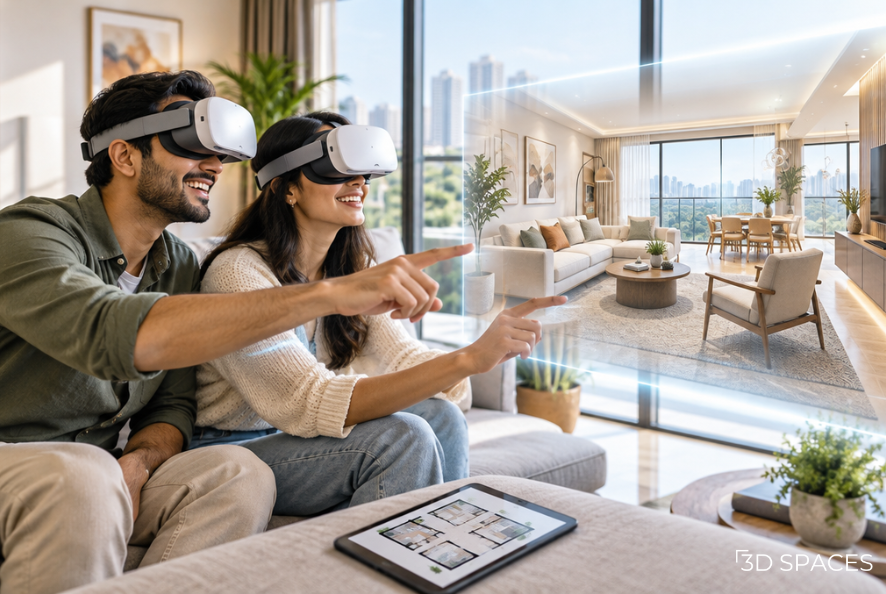
Preview your future home in VR before a single wall is touched.
Frequently Asked Questions
-
Traditional Indian design uses carved wood, brass, rich colours and cultural motifs. Modern Indian design uses clean lines, neutral colours, smart storage and a few Indian accents. Traditional feels layered. Modern feels light.
-
Modern Indian design is usually best for small flats. It uses modular furniture, open layouts and light colours that make rooms feel larger. Add one traditional accent, such as a jali panel, for character.
-
Yes. This is called Indian fusion interior design. Use a modern base, add one traditional hero piece per room, and repeat its colour or material twice. Ekaurr describes modern Indian fusion as one of the most practical styles for urban homes.
-
Carved wooden furniture, vibrant textiles, ethnic motifs, brass or copper decor and cultural symbols are the main elements. Jharokhas, arches and jali screens add architectural character.
-
Published estimates put 2 BHK interiors at about ₹1,000 to ₹1,200 per sq ft and 3 BHK interiors at about ₹1,200 to ₹1,700 per sq ft. Final cost depends on materials, finish level and scope.
