
9 Trendy False Ceiling Light Designs That Will Elevate the Vibe of Your Home

A well-designed false ceiling light design can turn an ordinary living room into a warm, layered space you actually want to spend time in.
If you have ever walked into a home and felt an instant sense of calm or warmth without quite knowing why, there is a good chance the ceiling had something to do with it. Lighting shapes a room more than most people realize, and when it comes from above through a thoughtfully planned false ceiling, it can completely change how a space feels.
A good false ceiling light design does more than just brighten a room. It hides wiring, adds depth, softens harsh corners, and gives you the flexibility to set the mood depending on the time of day or the occasion. Whether you are working with gypsum, POP, or a mix of materials, the right lighting choice can be the difference between a ceiling that just exists and one that becomes the quiet star of the room.
In this guide, we are walking through nine false ceiling lighting ideas that are genuinely worth considering in 2026, along with some honest, practical guidance on how to choose between them.
Why Ceiling Lighting Deserves More Attention Than It Gets
Most people plan their false ceiling around the shape and the finish, and lighting becomes an afterthought that gets decided in the last week before installation. That is usually a mistake. The way light falls in a room affects how big or small it feels, how the colours on your walls read, and even how comfortable you feel relaxing in that space at the end of the day.
Ceiling light designs for home interiors also need to work with your daily routine. A living room used for both quiet evenings and hosting guests needs a different lighting plan than a study that needs consistent, glare-free light for hours at a stretch. Getting this right at the design stage saves you from redoing electrical work later, which is a headache nobody wants.
Trying to figure out how much light your living room actually needs versus your study? That is exactly the kind of planning 3D Spaces does before a single wire is laid. Reach out and we will map a lighting plan around your daily routine, not just the room's shape.
1. Cove Lighting for a Soft, Ambient Glow
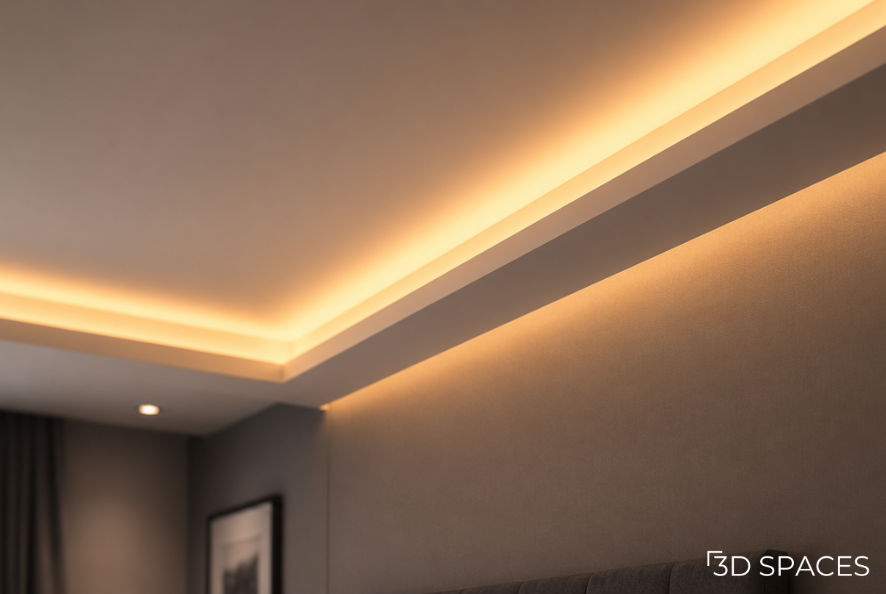
Cove lighting is a favourite false ceiling led lights design because it lights the room without a single visible bulb.
Cove lighting is one of the most popular false ceiling lighting ideas for a reason. LED strips are tucked into a recessed groove along the edge of the ceiling, so the light bounces off the ceiling and walls instead of shining directly into the room. The result is a soft, indirect glow that makes a room feel calm and larger than it actually is.
This works beautifully in bedrooms and living rooms where you want warmth without harsh light. Warm white LEDs in the 2700K to 3000K range usually give the cosiest effect, while cooler tones work better in a study or home office.
You can also read : 20+ Ceiling Colour Combination Ideas That'll Make You Look Up!
2. Backlit Gypsum Panels for a Statement Wall or Ceiling

Backlit gypsum panels bring texture and light together in one design move, ideal for a bedroom or formal living room.
Backlit panels have become a favourite among people who want their gypsum false ceiling lighting to double as decor. A textured or patterned gypsum panel is lit from behind, so the design glows softly instead of relying on paint or wallpaper for visual interest.
This design idea works particularly well over a bed, above a dining table, or as a ceiling feature in a formal living room. It photographs beautifully too, which is part of why it shows up so often on design inspiration boards.
3. Recessed LED Spotlights for Everyday Function
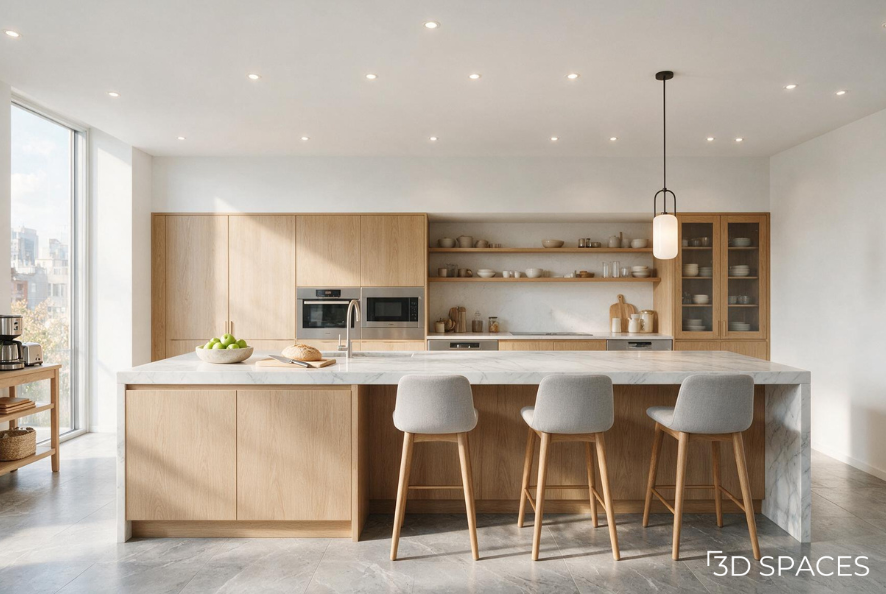
Recessed spotlights keep a false ceiling light design practical, which is why they are a staple in kitchens and work areas.
Not every room needs a dramatic lighting moment, and that is where recessed spotlights come in. These sit flush with the false ceiling and provide clean, even light that works well in kitchens, hallways, and study rooms. They are also one of the more budget-friendly false ceiling led lights design choices since they use less material and labour compared to layered designs.
The trick with recessed lighting is spacing. Too few spotlights and you get uneven, patchy light. Too many and the room feels clinical rather than cozy. A good rule of thumb is to plan spotlight placement around your furniture layout rather than just spacing them evenly across the ceiling grid.
4. Layered POP Ceiling With LED Strip Detailing
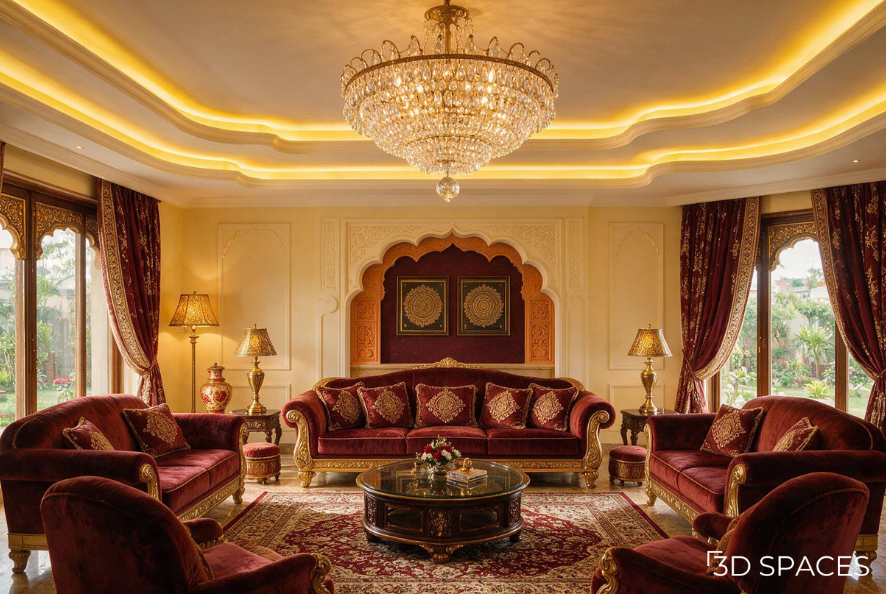
Layered POP ceiling light designs add a sense of depth that flatter more traditional and formal interiors.
POP ceiling light designs are known for their flexibility. Since POP is moulded on-site rather than pre-fabricated, it lends itself well to curved, multi-layered ceilings with LED strips tucked between each level. This creates a stepped effect where light appears to float between layers, which adds real depth to a room.
This style suits living rooms and dining areas where you want a slightly more traditional or ornate feel. It does need skilled labour to execute well, so it is worth choosing a contractor with real experience in POP work rather than someone who mostly handles gypsum.
5. A Chandelier Framed Inside a False Ceiling Cutout
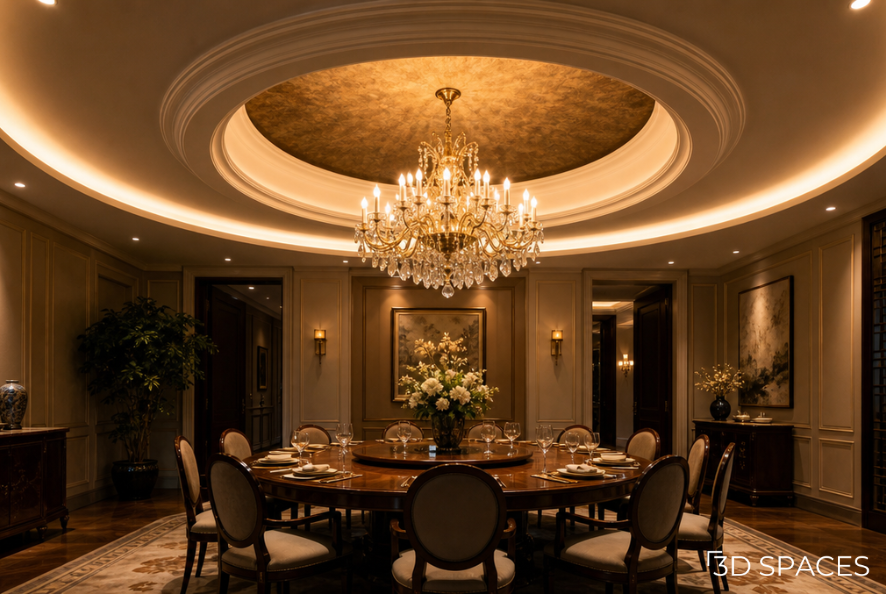
A chandelier framed within a false ceiling cutout brings a sense of occasion to dining rooms and living areas alike.
There is something about a chandelier that instantly elevates a room, and pairing one with a false ceiling cutout gives you the best of both. The false ceiling is built around the original slab where the chandelier is anchored, so you get the drama of a statement fixture along with a clean, finished ceiling around it.
This is best suited for living rooms, dining spaces, or a grand entryway. Just make sure your electrician and false ceiling contractor coordinate closely here, since chandeliers are heavier and need proper structural support rather than depending on the false ceiling itself to hold their weight.
You can also read about the WPC Wall Panel: The Ultimate Guide for Homes & Offices 2026
6. Track Lighting for Rooms That Do Double Duty
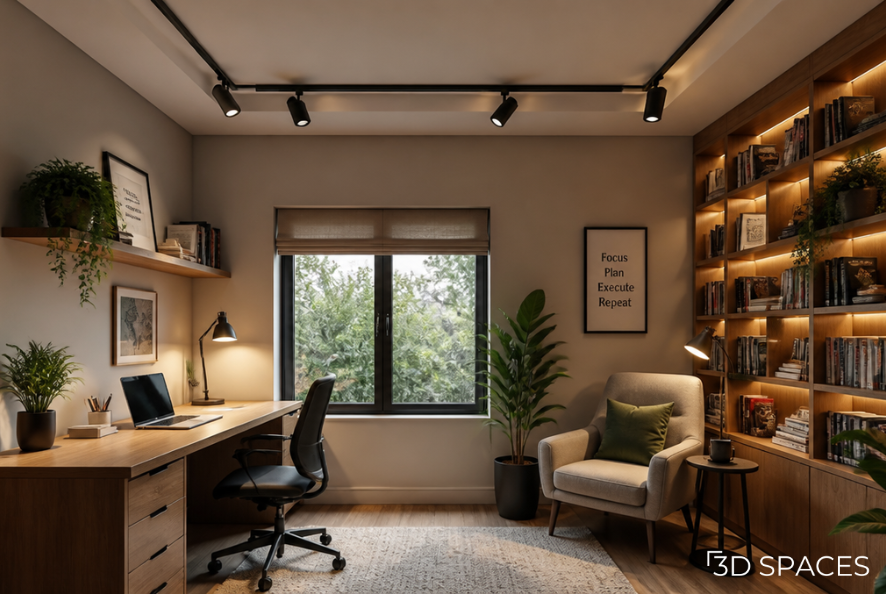
Track lighting keeps a false ceiling light design adaptable for rooms that shift between work and rest.
Track lighting used to be reserved for kitchens and corridors, but it has found its way into bedrooms, studies, and living rooms that serve more than one purpose. Since the fixtures can be adjusted and redirected along the track, this is one of the more flexible ceiling light designs for home spaces where the furniture layout might change over time.
It works particularly well in a bedroom that also functions as a workspace, where you need focused light for a desk in the day and softer ambient lighting in the evening.
Curious how track lighting would look in your own space? Share a photo of your room and we will suggest a layout that fits.
7. Pendant Lights Dropped Through the False Ceiling
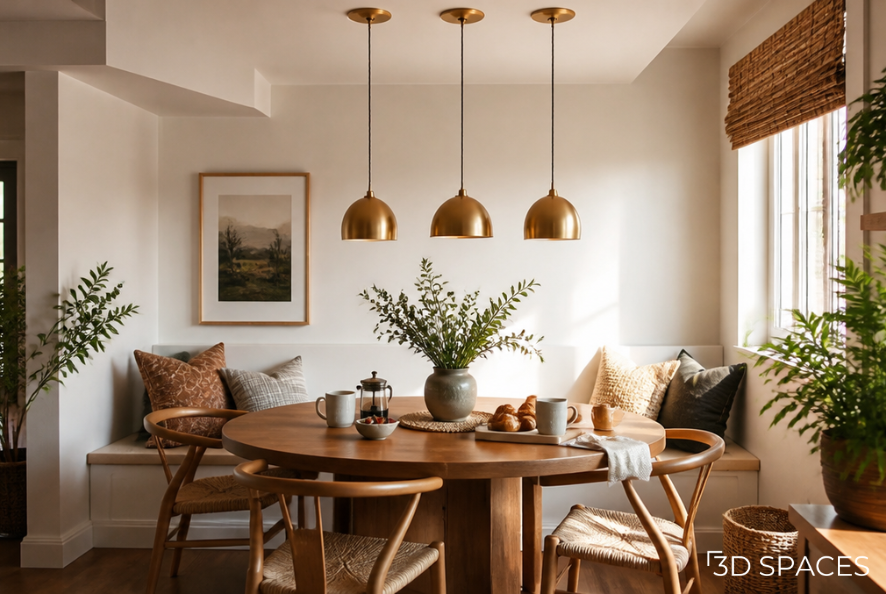
Pendant lights dropped through a false ceiling cutout add character to false ceiling lights for living room and dining spaces alike.
Pendant lights bring personality into a room in a way that recessed or cove lighting simply cannot. A pendant dropped through a false ceiling cutout above a dining table, kitchen island, or reading corner becomes a focal point on its own, in addition to doing the job of lighting the space.
This is one of the easiest ways to bring in a bit of colour, texture, or an unexpected material like rattan or brass into a room that might otherwise feel neutral.
8. Colour-Changing LED Panels for Flexible Moods
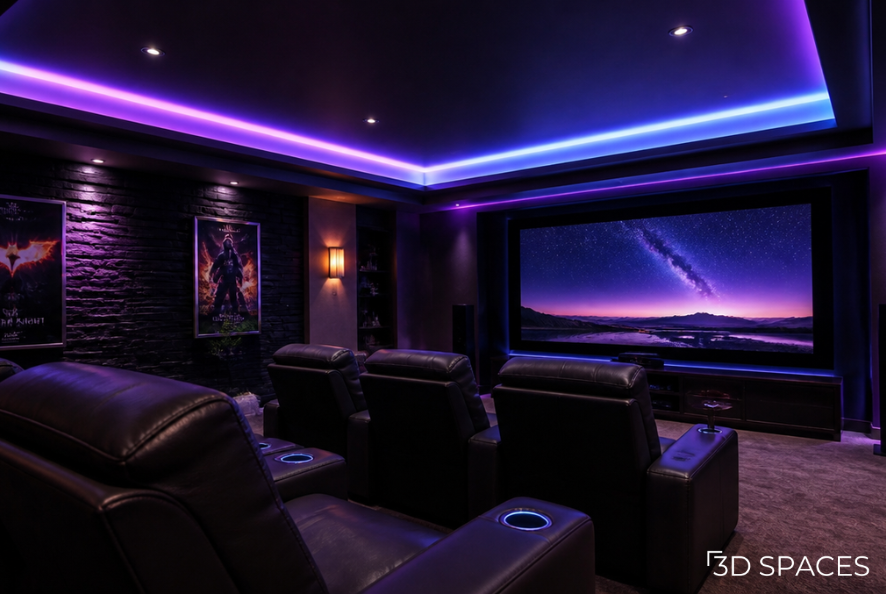
Colour changing LED panels bring flexibility to modern false ceiling light designs, especially in home theatres and lounges.
Smart LED panels that shift between warm white, cool white, and colour modes have become genuinely popular, especially in homes with a home theatre corner, a lounge area, or a teenager's bedroom. These panels usually sit within a gypsum or POP frame and can be controlled through an app or a simple remote.
The appeal here is flexibility. The same ceiling that gives you bright white light for a video call in the afternoon can shift into a warm, dim, colour-washed glow for movie night.
9. Wood and Metal Inlay With Warm LED Accents
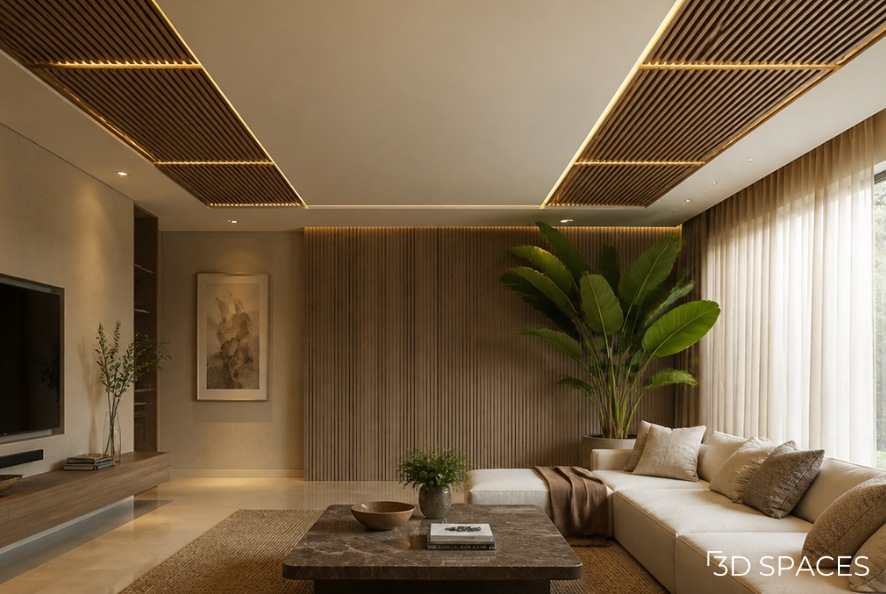
Wood and metal inlay lighting brings a natural, timeless quality to modern false ceiling light designs.
For a more premium, textured look, some homeowners are combining wood or metal inlay work with warm LED lighting tucked along the seams. This gives the ceiling a natural, almost architectural quality rather than a purely decorative one, and it pairs beautifully with earthy, minimalist interiors.
This is a higher-investment design choice, both in materials and skilled carpentry, but it tends to age well and does not feel tied to a passing trend the way some heavily patterned designs can.
Ready to bring one of these ideas into your own home? Get in touch with us for a free ceiling lighting consultation tailored to your space and budget.
POP or Gypsum: Which Should You Pick for Lighting
This is one of the most common questions we hear, and the honest answer is that it depends on what you are trying to achieve. POP ceiling light designs are generally more affordable and better suited to curved, intricate patterns, since POP is moulded directly on-site. Gypsum false ceiling lighting, on the other hand, comes in prefabricated boards that install faster, hold up better in humid conditions, and generally have a longer lifespan.
If your design leans toward soft curves, layered steps, or an ornate look, POP tends to execute this more easily. If you want a clean, contemporary finish with less mess during installation and better long-term durability, gypsum is usually the safer bet. Either material can support LED strips, recessed spotlights, or backlit panels well, so the decision often comes down to your design style and budget rather than the lighting itself.
A Few Honest Things to Keep in Mind Before You Finalise
Having seen a fair number of these projects come together, here is what we would genuinely tell a friend before they lock in a design. First, do not choose a lighting design purely because it looks good in a photo online. Ceiling height, room size, and existing electrical points all affect what will actually work in your space.
Second, think about layering rather than picking just one style. A combination of ambient light from cove lighting, task light from spotlights, and a focal fixture like a pendant or chandelier tends to feel far more finished than relying on a single light source for the whole room.
And finally, get your electrical planning done early. Retrofitting lighting into an already finished false ceiling is far more expensive and disruptive than planning it during the design stage. A five-minute conversation with your designer about where you want light concentrated can save you weeks of rework later.
How can 3D Spaces help?
At the end of the day, whichever design you lean toward, it helps to work with a team that has actually executed these details before rather than just rendered them on a screen. This is where 3D Spaces comes in. Our team has installed enough of these designs across real homes to know which ones translate well from a photo to an actual ceiling and which ones need tweaking based on your room's height, wiring, or budget. We have seen homeowners fall in love with a design online, only to realise during execution that their ceiling height or electrical layout could not support it without changes. Working with 3D Spaces means someone catches that early, during the planning stage, instead of after the cutting has already started.
Fallen for one of these nine designs, but not sure it will work in your actual ceiling? Book a free consultation with 3D Spaces and we will tell you honestly what fits your space, your wiring, and your budget, before any work begins.
Frequently Asked Questions
-
For most living rooms, a combination of cove lighting along the edges and a central pendant or chandelier works well. It gives you soft ambient light for everyday use and a statement piece for when you are hosting guests.
-
Both work well with LED lighting. POP is more budget-friendly and better for curved or layered designs, while gypsum offers a smoother, more durable finish that holds up better over time.
-
Yes, LED lights are the standard choice for false ceiling led lights design today. They use less power, produce less heat, and last significantly longer than traditional bulbs, which matters since replacing a bulb inside a false ceiling is not as simple as changing one in an open fixture.
-
Not if it is planned well. Recessed spotlights and cove lighting actually help a small room feel more open, since the light spreads evenly instead of creating harsh shadows. Bulky, multi-layered designs are what tend to make a low ceiling feel more closed in.
-
Yes, partial false ceilings with lighting are a popular and budget-friendly option, especially over a seating area, a dining table, or a bed. It gives you the lighting effect without the cost of covering the entire ceiling.
