

Modern living room with an exposed concrete ceiling and warm wooden accents.
A cement ceiling design can give your home a clean, modern look through exposed concrete, subtle textures, geometric patterns, or carefully planned lighting. The right option depends on your room size, ceiling height, interior style, maintenance needs, and budget.
For Indian homes, a simple cement-plaster finish can suit minimal interiors, while an exposed concrete ceiling adds an industrial character. Decorative mouldings and cement-based textures offer a more detailed look. If you want concealed wiring, recessed lights, or layered shapes, a false ceiling made with a suitable system may be more practical.
In this guide, we explore 10 cement ceiling design ideas for halls, bedrooms, and living rooms, along with their best applications and the details to consider before choosing a design.
Quick Guide: Which Cement Ceiling Design Should You Choose?
For a modern living room: Exposed concrete or a smooth cement finish.
For a small hall: A simple, light-coloured finish with minimal visual detailing.
For a bedroom: A soft textured finish or a restrained decorative pattern.
For a luxury interior: A feature ceiling with carefully planned geometric detailing.
For a low ceiling: A minimal design that avoids unnecessary drops and bulky layers.
For concealed lighting and wiring: Consider a compatible false-ceiling system instead of assuming a cement finish can accommodate everything.
Important: Exposed concrete, cement plaster, decorative cement finishes, POP, and gypsum false ceilings are different solutions. They may look similar in photographs, but they use different materials and installation methods.
What Is a Cement Ceiling Design?
A cement ceiling design uses a cement-based finish, the appearance of concrete, or decorative elements inspired by cement and concrete to shape the look of a room's ceiling.
The term can refer to several different approaches:
Exposed concrete ceiling: The structural concrete slab remains visible, with an appropriate finish or protective treatment where needed.
Cement-plaster ceiling: A cement-based plaster is applied over a suitable ceiling surface to create a finished appearance.
Textured cement finish: A compatible decorative coating creates subtle movement, texture, or a concrete-like appearance.
Decorative ceiling detailing: Mouldings, grooves, or patterns add visual interest. These may use materials other than cement.
Concrete-look false ceiling: A secondary ceiling system uses a concrete-effect finish to recreate the look without leaving the structural slab exposed.
Before selecting a design, confirm which construction method is intended. A concrete-look decorative finish is not the same as changing or carving the structural slab.
Also Read: Stylish Cement Cupboard Designs for Modern Homes!
10 Cement Ceiling Design Ideas for Modern Indian Homes
1. Exposed Concrete Ceiling for an Industrial Look
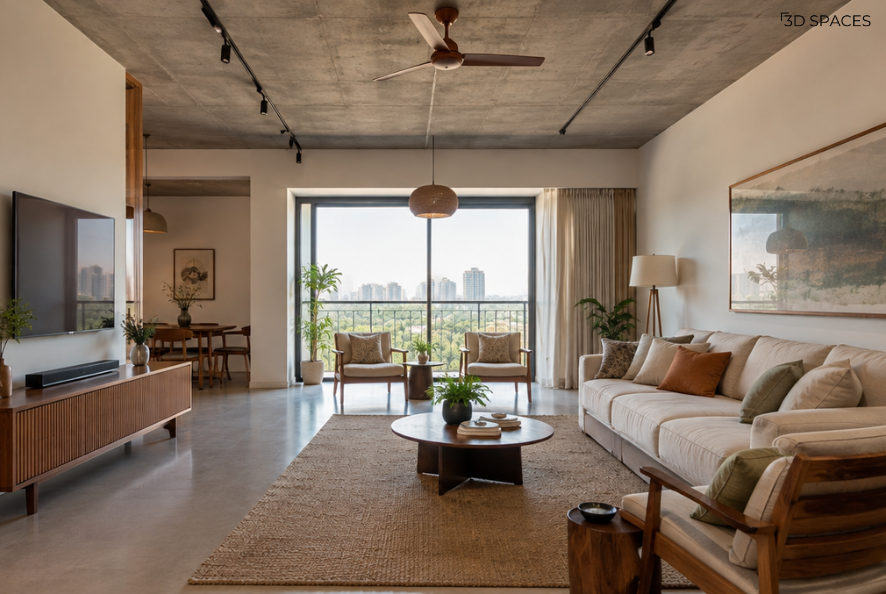
Exposed concrete ceilings bring an industrial, contemporary character to living rooms while complementing warm wood and neutral furnishings.
An exposed concrete ceiling keeps the structural surface visible and makes its natural texture part of the interior design. Variations in tone and texture can add character, particularly in contemporary apartments, loft-inspired interiors, and open-plan living spaces.
Pair the grey surface with warm wood, neutral upholstery, black metal accents, or soft lighting to balance the industrial appearance.
Best for: Modern living rooms, open-plan homes, studios, and industrial-inspired interiors.
Design tip: Review the actual slab finish before committing. Patching, visible joints, stains, or uneven colour may be part of the final appearance. The surface may require professional assessment and an appropriate finish.
2. Smooth Cement-Plaster Ceiling for a Minimalist Home
A smooth cement-plaster ceiling offers a restrained finish for homeowners who prefer simple lines over decorative patterns. It works well with neutral wall colours, uncluttered furniture, and contemporary interiors.
This option is especially useful when you want the ceiling to blend into the overall room design rather than become its main feature.
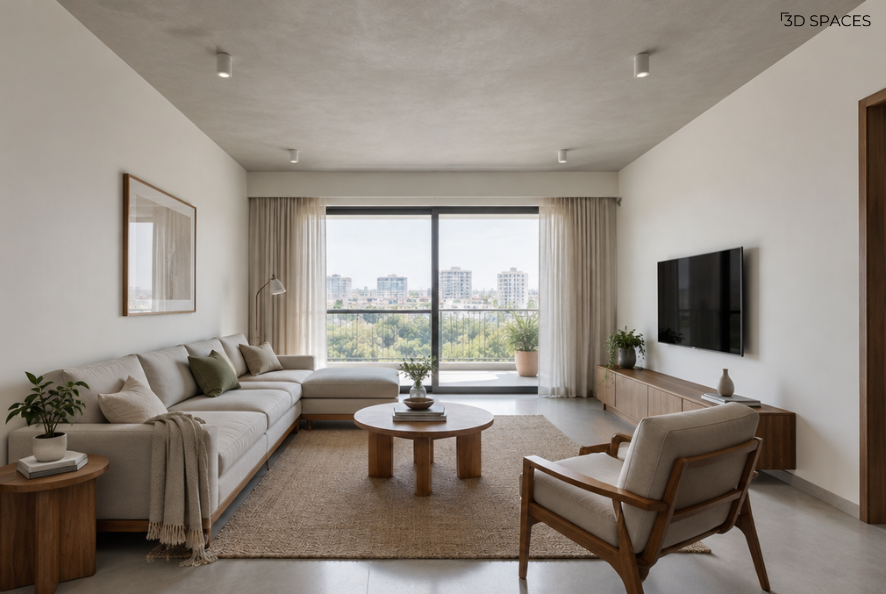
A smooth cement-plaster ceiling creates a clean, understated finish for minimalist homes and contemporary apartment interiors.
Best for: Minimalist living rooms, bedrooms, passageways, and understated interiors.
Design tip: Ask the contractor to confirm the suitability of the substrate, plaster thickness, surface preparation, curing, and final paint or coating. A smooth finish depends on proper workmanship, not just the material.
3. Textured Cement Ceiling for Subtle Depth
A textured cement-effect ceiling adds visual interest without relying on elaborate mouldings. Depending on the product and application method, the surface can have a fine, cloudy, brushed, or softly mottled appearance.
This approach can work particularly well in neutral interiors, where a slight variation in the ceiling finish helps prevent the room from feeling flat.
Best for: Living rooms, bedrooms, reading corners, and contemporary homes with earthy colour palettes.
Design tip: Request a sample on a similar surface before finalising the finish. Texture can appear different under daylight, warm LEDs, and directional spotlights.
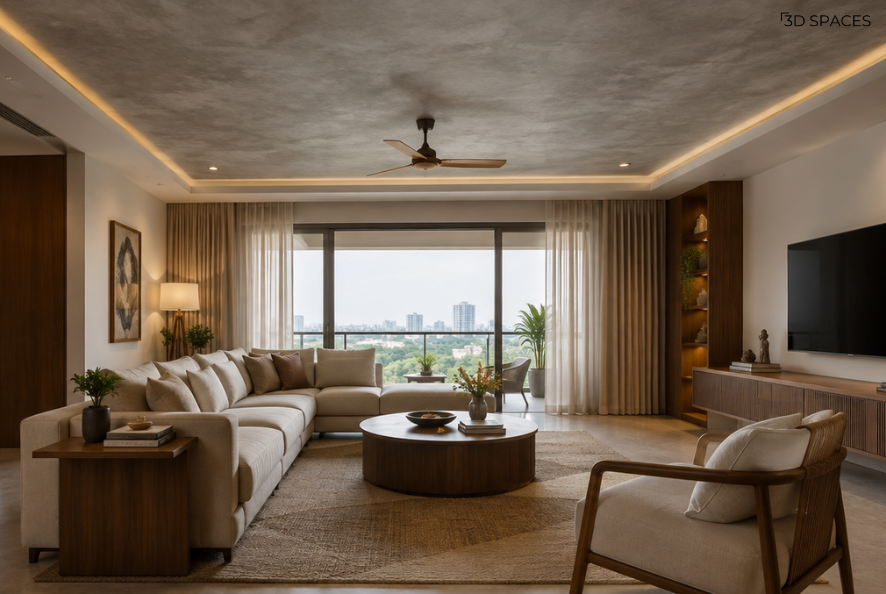
A textured cement-effect ceiling adds depth and visual interest without requiring elaborate decorative patterns.
4. Geometric Cement Ceiling Design
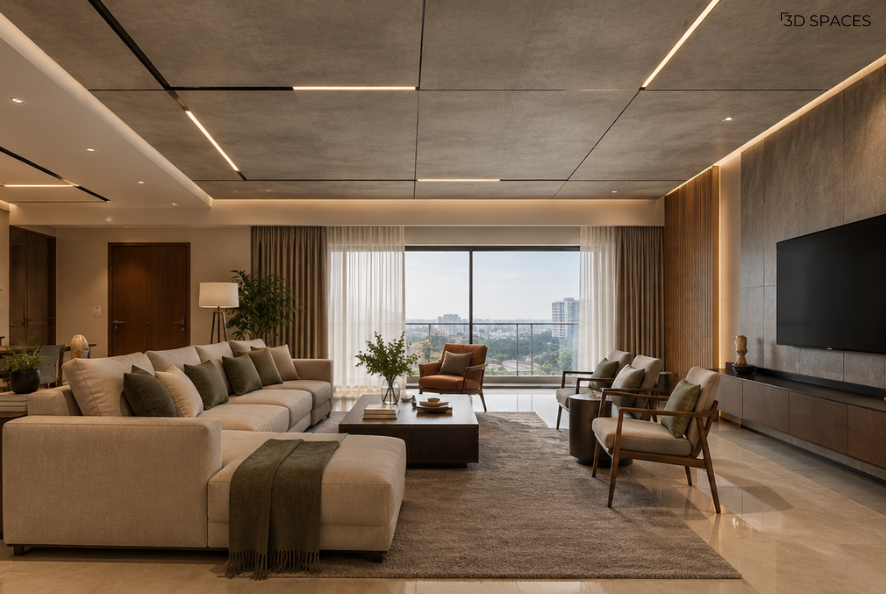
Geometric ceiling patterns introduce structure and rhythm to modern interiors when scaled to suit the room.
Geometric ceiling designs use repeated lines, rectangular divisions, or simple patterns to introduce structure. The look can be created through suitable surface detailing or a compatible secondary ceiling system, depending on the intended depth and finish.
For a modern home, a restrained geometric layout often works better than several competing shapes.
Best for: Contemporary living rooms, dining spaces, and larger halls.
Design tip: Align the ceiling pattern with the room's proportions, furniture layout, or lighting plan. If the room is compact, use fewer lines and keep the pattern visually light.
5. Cement Ceiling with Linear Lighting
Linear lighting can emphasise the length or layout of a room while highlighting a concrete or cement-effect ceiling. The result can look architectural without requiring an elaborate decorative pattern.
The lighting may be surface-mounted or integrated into a suitable ceiling detail. Recessed channels require the correct construction system and should not be cut into a structural slab without professional approval.
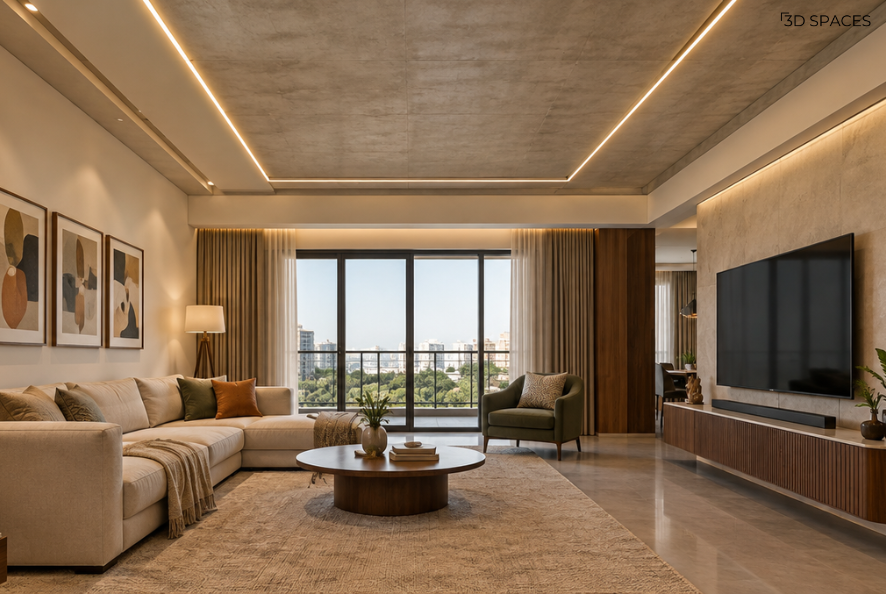
Linear lighting highlights ceiling geometry and creates a contemporary look when planned with the right fixtures and installation system.
Best for: Modern halls, living rooms, dining areas, and open-plan interiors.
Design tip: Plan the lighting before finalising the ceiling. Check fixture access, glare, wiring routes, dimming requirements, and the appropriate colour temperature for the room.
6. Cement Ceiling with Wooden Accents
Wood and cement-effect finishes create a contrast between warm and cool materials. Wooden beams, narrow accent strips, or wood-look panels can soften the grey appearance of a concrete ceiling.
The wood element can be used sparingly so that the ceiling remains balanced rather than visually crowded.
Best for: Living rooms, modern rustic homes, Scandinavian-inspired interiors, and contemporary bedrooms.
Design tip: Consider the room's natural light, existing wood finishes, and maintenance needs. Confirm how any ceiling-mounted elements will be supported and installed safely.
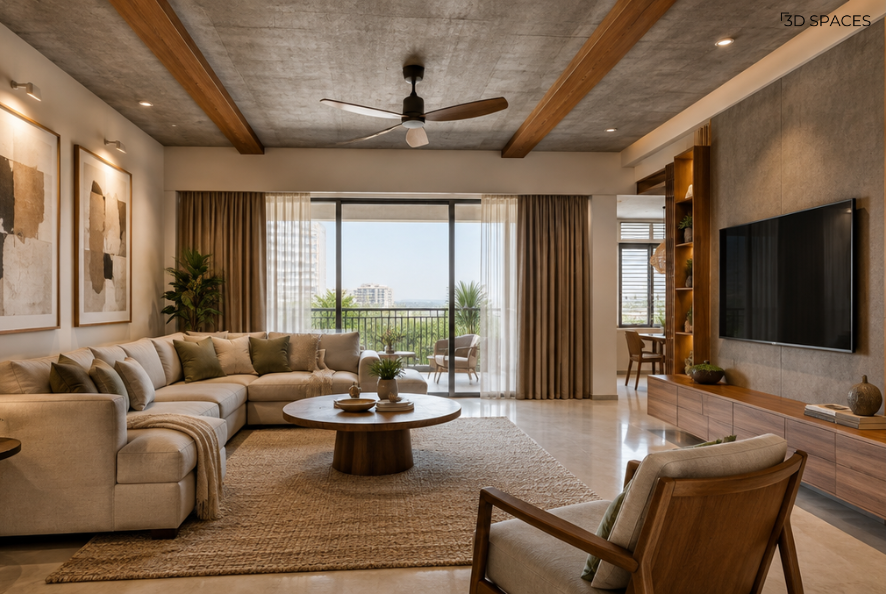
Wooden accents soften the cool tones of a cement ceiling and create a balanced mix of industrial and natural materials.
7. Cement Ceiling Design for a Small Hall
A simple cement ceiling design helps a compact hall feel open and uncluttered without unnecessary decorative layers.
In a compact hall, a simple cement ceiling design can create a clean and uncluttered appearance. A light cement finish, restrained texture, or a limited number of well-positioned lights may be more suitable than elaborate patterns.
The aim is to maintain a visual sense of openness rather than add unnecessary layers overhead.
Best for: Small living rooms, apartment halls, compact dining areas, and spaces with limited ceiling height.
Design tip: Measure the available ceiling height before adding any secondary ceiling elements. A design that looks attractive in a large showroom may feel too heavy in a compact apartment.
8. Decorative Cement Ceiling for a Traditional Interior
For homeowners who prefer a more decorative look, selected motifs or moulded details can complement traditional furniture, patterned flooring, and warm finishes. The exact method depends on the design: some features may use cement-based materials, while others are made with plaster or specialised mouldings.
A decorative ceiling can create a focal point, but it needs to suit the scale of the room.
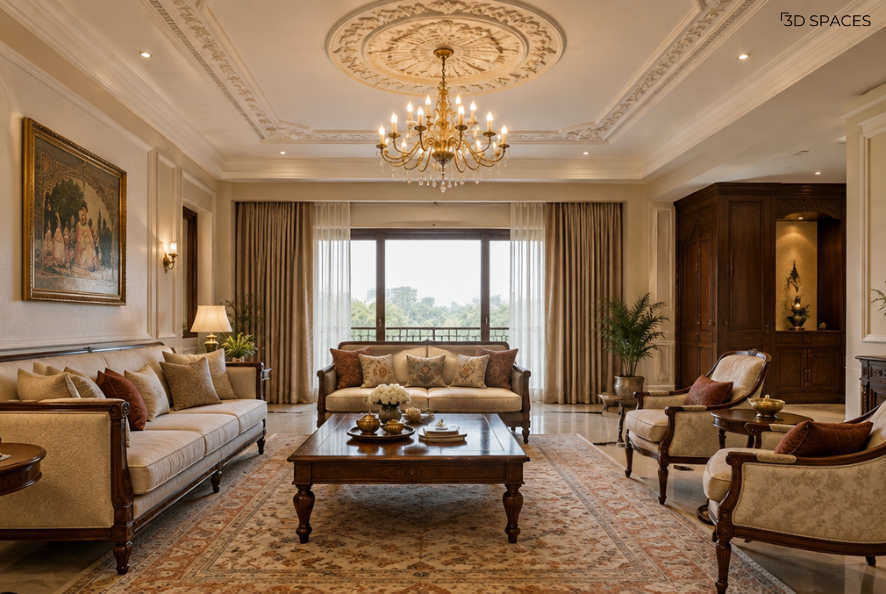
Decorative ceiling motifs add a traditional focal point when their materials, proportions, and detailing suit the room.
Best for: Larger living rooms, formal sitting areas, traditional interiors, and statement spaces.
Design tip: Confirm the material and installation method rather than assuming every ornamental ceiling is made from cement. Keep heavier detailing away from areas where it would conflict with fans, lights, or other fittings.
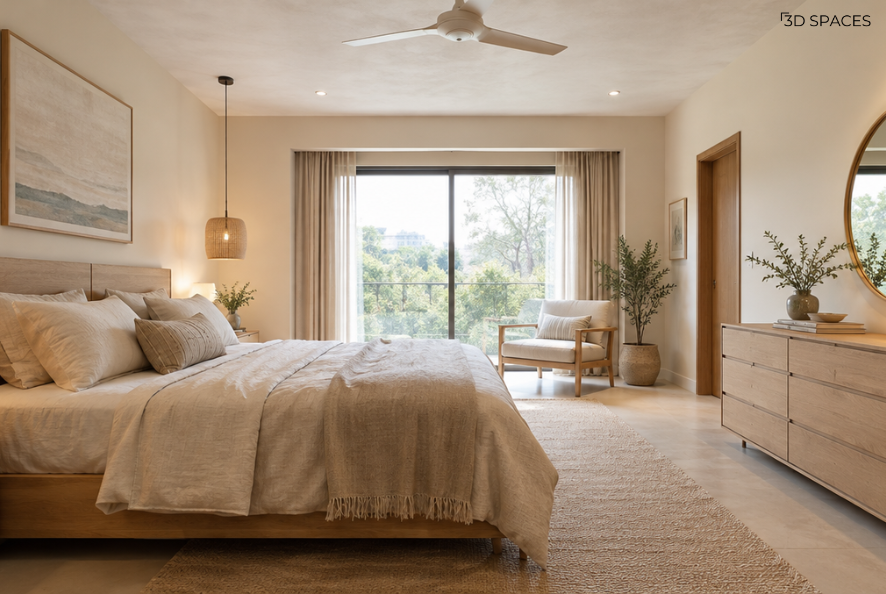
9. White Cement-Effect Ceiling for a Bright, Calm Interior
A white or pale cement-effect finish combines the subtle texture of concrete-inspired design with a lighter visual appearance. It is a useful alternative for homeowners who like the character of cement but do not want a dark grey ceiling.
Pair it with warm wood, beige upholstery, soft grey walls, or muted accent colours for a balanced interior.
Best for: Bedrooms, smaller living rooms, neutral interiors, and spaces with a soft contemporary style.
Design tip: Test the finish under both daylight and artificial lighting. A white surface may look warmer or cooler depending on its undertone and surrounding colours.
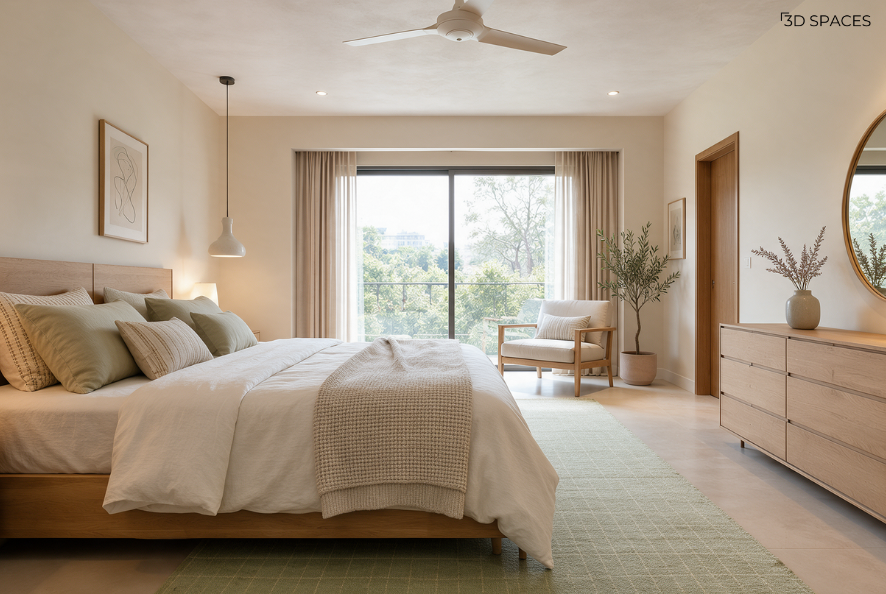
A pale cement-effect ceiling brings subtle texture to a bedroom while maintaining a bright and calm atmosphere.
10. Concrete-Look False Ceiling for Integrated Design
A concrete-look false ceiling recreates the appearance of cement or concrete using a suitable secondary ceiling system and finish. It can be useful when the design needs to coordinate lighting, conceal selected services, or introduce a decorative ceiling layout.
The appearance can be similar to exposed concrete, but the construction is different.
Best for: Renovations, contemporary apartments, media rooms, and interiors that need a coordinated lighting layout.
Design tip: Compare the total ceiling build-up, usable ceiling height, access to services, material specifications, and installation requirements. A false ceiling is not automatically the best option for every room.
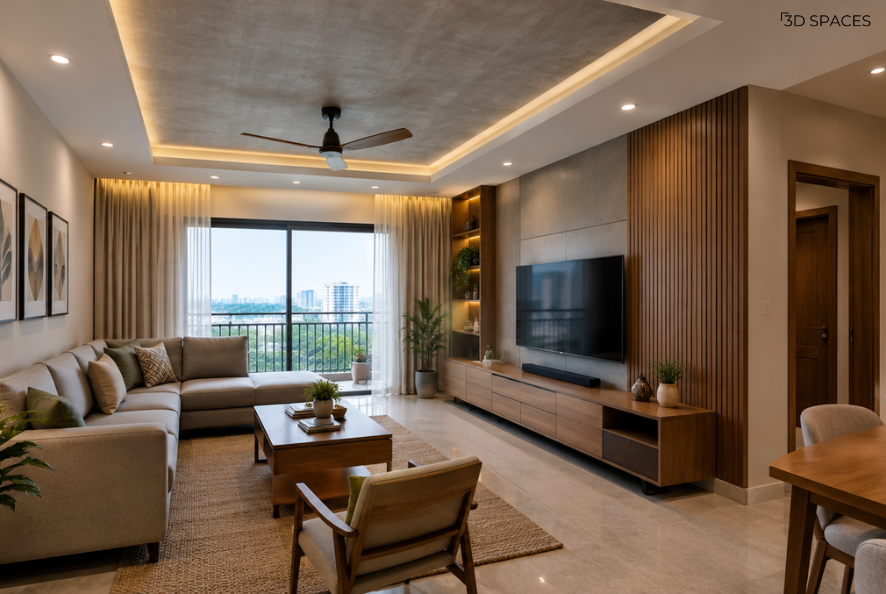
A concrete-look false ceiling recreates the appearance of cement while allowing selected lighting and services to be integrated into a suitable secondary system.
Cement Ceiling Design: Which Option Works Best for Each Room?
| Factor | Cement or Concrete Finish | False Ceiling |
|---|---|---|
| Basic approach | Finishes or exposes the existing ceiling surface | Creates a secondary ceiling below the main ceiling |
| Appearance | Natural concrete character or cement-based texture | Smooth, layered, geometric, or concrete-look designs |
| Ceiling height | Usually preserves more height if no additional layer is added | Reduces usable height by the ceiling build-up |
| Lighting | Depends on the surface and installation method | Can accommodate selected recessed or concealed lighting systems |
| Concealing services | Limited without additional construction | Can conceal selected wiring and services when appropriately designed |
| Best suited for | Simple, exposed, or textured ceiling finishes | Integrated lighting, secondary layers, and decorative ceiling forms |
Cement Ceiling vs False Ceiling: What Is the Difference?
The right choice depends on whether you want to finish the existing ceiling surface or build a separate layer below it.
| Room or Requirement | Suitable Design | What to Consider |
|---|---|---|
| Living room | Exposed concrete, textured finish, or geometric detailing | Furniture style, daylight, and lighting layout |
| Small hall | Smooth, light-coloured cement finish | Available ceiling height and visual simplicity |
| Bedroom | Soft texture or pale cement-effect finish | Comfort, lighting glare, and a calm colour palette |
| Dining area | Geometric detailing or linear lighting | Table placement and pendant-light position |
| Traditional interior | Selected decorative motifs | Scale, material, and coordination with existing decor |
| Concealed wiring | Suitable false-ceiling system | Height loss, service access, and installation requirements |
FAQs
-
Yes, a concrete ceiling design is durable, versatile, and ideal for creating modern or traditional aesthetics, making it a great choice for long-lasting room interiors.
-
Ordinary Portland Cement (OPC) or Portland Pozzolana Cement (PPC) is commonly used for room ceiling cement plaster design due to its strength and smooth finish.
-
Ceilings with designs are often referred to as false ceilings or POP cement ceiling designs, offering decorative and functional elements to a room.
-
Gypsum is the cheapest material for false ceilings, but cement plaster is a durable and affordable alternative for cement ceiling designs for halls or bedrooms.
-
The cost for a cement ceiling design for a bedroom or hall ranges from $3 to $5 per square foot, depending on the material and intricacy of the design.
-
Gypsum ceilings are typically cheaper than cement ceiling designs, but cement offers more durability and better suitability for outdoor or high-humidity areas.
-
A smooth cement finish, exposed concrete ceiling, or restrained geometric design can work well in a hall. The best choice depends on ceiling height, room size, lighting, and the overall interior style.
-
A cement or concrete-effect ceiling can suit a bedroom if the finish, colour, and lighting create a comfortable atmosphere. Pale tones and subtle textures are useful options for a calm, contemporary look.
-
An exposed concrete ceiling leaves the structural concrete surface visible. A cement-plaster ceiling uses a cement-based layer to finish the surface. The two can look similar in some interiors, but their construction and surface characteristics differ.
