15 Best Exterior House Color Combinations in India (2026)

Explore modern Indian house exterior colour combinations featuring cream, greige, charcoal grey, and warm wood accents for a stylish, contemporary look.
Your home's exterior is the first thing people notice. The right colour combination can make a compact house look more elegant, highlight a modern duplex's architecture, or give a traditional Indian home a warm, welcoming appearance.
But choosing the best exterior house colour combination in India involves more than selecting two attractive shades. You also need to consider sunlight, monsoon exposure, dust, building materials, architectural style, and maintenance.
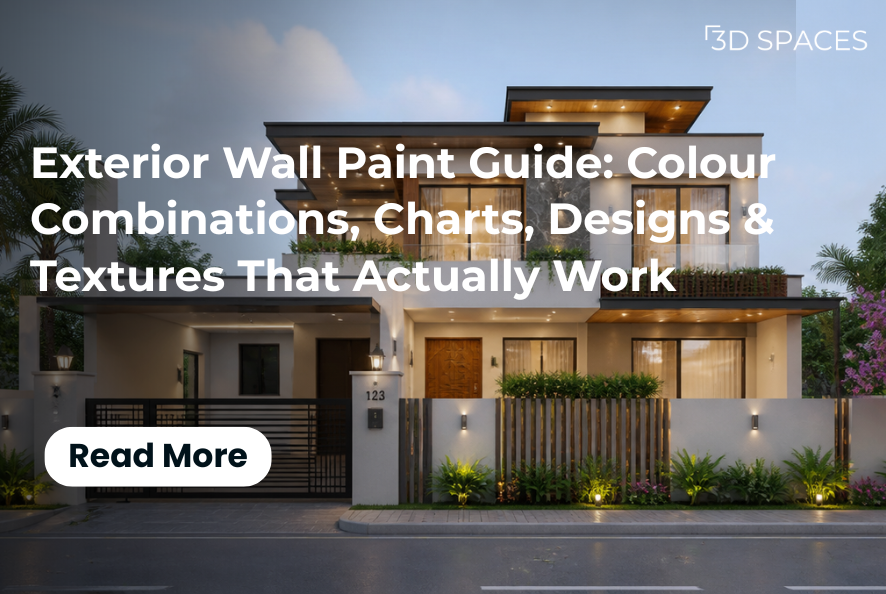
Some of the best exterior house colour combinations for Indian homes in 2026 include cream and brown, white and charcoal grey, beige and terracotta, sage green and ivory, and greige with wood accents. These palettes can suit everything from simple single-floor houses to contemporary luxury villas.
This guide explores 15 exterior colour combinations, explains where to apply each shade, and helps you choose the right palette for your home's design and local climate.
Best Exterior House Colour Combinations at a Glance
If you're planning to repaint your house or finalise the colours for a new elevation, start with these combinations.
| Colour Combination | Best For | Design Style |
|---|---|---|
| Cream and chocolate brown | Independent houses | Classic and elegant |
| White and charcoal grey | Modern duplexes | Contemporary |
| Beige and terracotta | Traditional homes | Earthy and warm |
| Sage green and ivory | Bungalows | Natural and calming |
| Light grey and white | Small houses | Simple and minimal |
| Sand beige and coffee brown | Urban houses | Warm and understated |
| Off-white and olive green | Modern villas | Nature-inspired |
| Pale yellow and white | Traditional houses | Cheerful and welcoming |
| Greige and wood accents | Luxury villas | Modern minimalism |
| Peach and cream | Compact houses | Soft and inviting |
| Navy blue and white | Contemporary houses | Bold and elegant |
| Dusty blue and warm grey | Modern duplexes | Subtle and sophisticated |
| Ivory and brick red | Heritage-style homes | Traditional |
| Taupe and charcoal | Premium residences | Refined and modern |
| Warm white and muted bronze | Minimalist villas | Luxury contemporary |
The best combination depends on the size, shape, and surroundings of your house. A palette that looks attractive on a large villa may need adjustment for a narrow urban façade.
1. Cream and Chocolate Brown
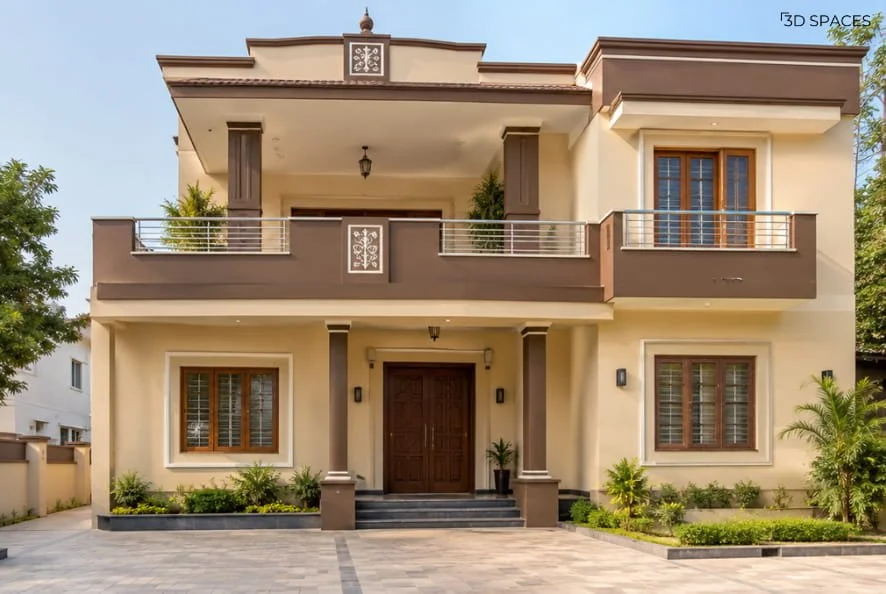
Cream walls paired with chocolate brown accents create a timeless and elegant exterior for Indian independent houses and duplexes.
Suggested palette: Cream #F1E4CC and Chocolate Brown #654735
Cream and chocolate brown is a versatile exterior house colour combination that suits both traditional and modern Indian homes.
Cream creates a warm, light background, while brown adds contrast and helps define architectural features.
Where to apply the colours:
Main exterior walls: Cream
Balcony projections and columns: Chocolate brown
Window borders: Warm off-white
Entrance door: Dark wood finish
Best for: Independent houses, duplexes, and traditional villas.
Design tip: Keep cream as the dominant colour and use brown on selected features. Too much dark brown can make a compact façade appear visually heavy.
2. White and Charcoal Grey
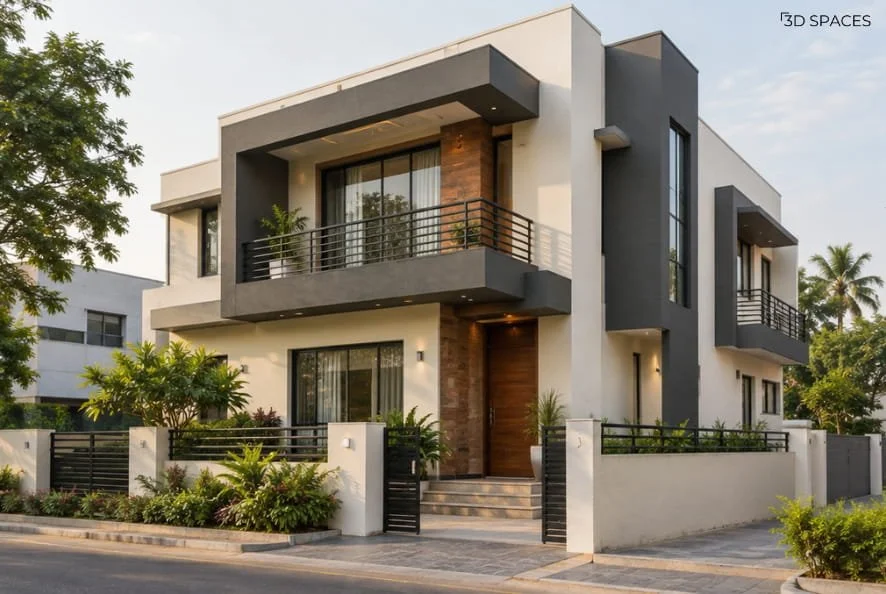
White and charcoal grey bring a clean, contemporary look to modern Indian duplexes with geometric elevations and bold architectural details.
Suggested palette: Warm White #F5F3EE and Charcoal Grey #42474B
White and charcoal grey is an excellent choice for homeowners who prefer clean lines and a contemporary architectural appearance.
The contrast works particularly well on houses with projecting balconies, rectangular frames, and geometric elevations.
Where to apply the colours:
Main walls: Warm white
Balcony projections: Charcoal grey
Entrance feature: Charcoal or wood-look cladding
Railings: Matte black
Best for: Modern duplexes, urban villas, and minimalist homes.
Design tip: Reserve charcoal for architectural highlights rather than covering the entire elevation. Dark exterior surfaces may absorb more solar heat than lighter alternatives.
3. Beige and Terracotta
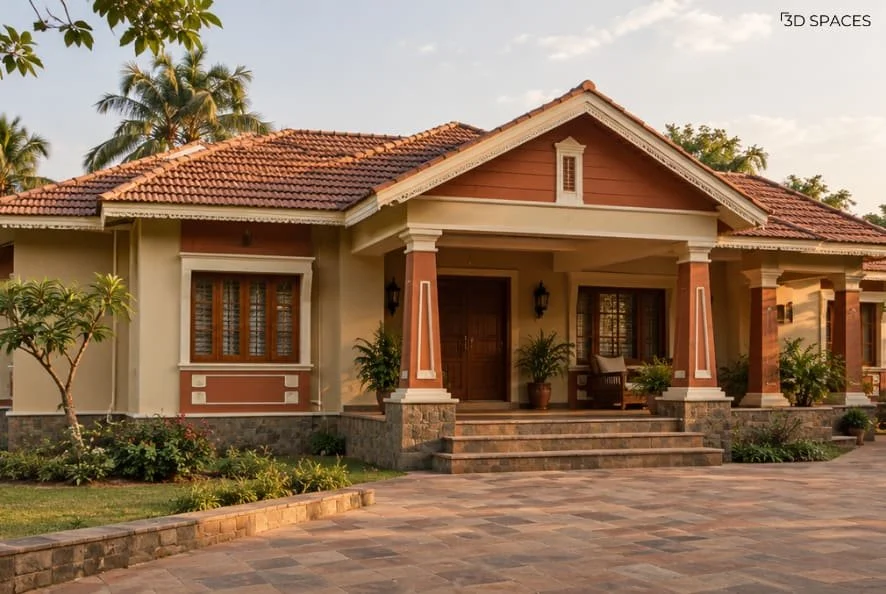
Beige and terracotta create a warm, earthy exterior colour combination inspired by traditional Indian architecture and natural materials.
Suggested palette: Sand Beige #DCC8A8 and Terracotta #B7654B
Beige and terracotta draws inspiration from earthy materials commonly associated with traditional Indian architecture.
The combination feels warm and natural, making it suitable for homes with courtyards, verandas, tiled roofs, or decorative exterior elements.
Where to apply the colours:
Main walls: Sand beige
Entrance walls: Terracotta
Decorative borders: Warm cream
Roofing or cladding: Coordinating earthy materials
Best for: Traditional houses, bungalows, and heritage-inspired residences.
Design tip: Pair this palette with natural stone, clay-inspired finishes, or warm-toned paving to create a cohesive appearance.
4. Sage Green and Ivory
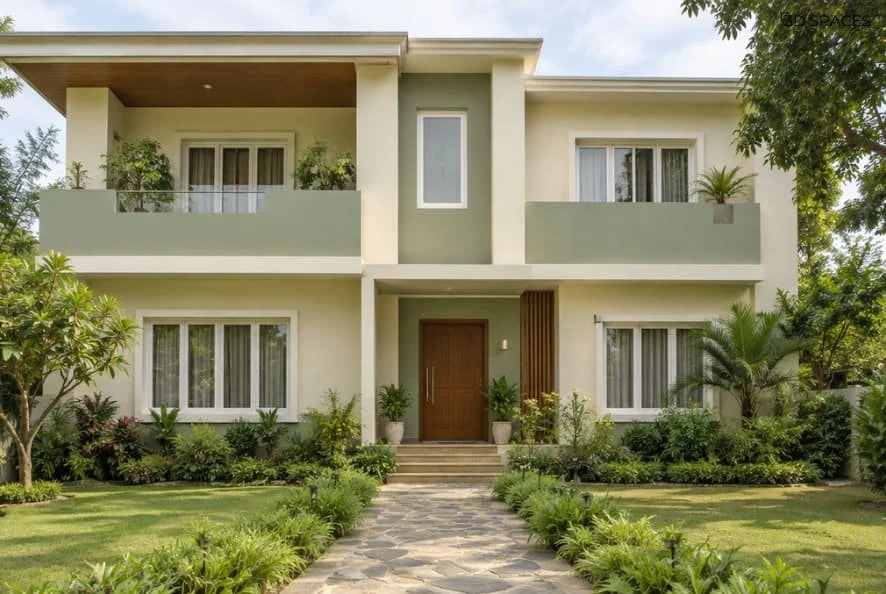
Sage green and ivory offer a calming, nature-inspired exterior palette for Indian bungalows and garden-facing homes.
Suggested palette: Sage Green #A5B29B and Ivory #F2EBD9
Sage green and ivory creates a peaceful, understated exterior. It is especially appealing for homes surrounded by gardens, trees, or landscaped outdoor areas.
Sage green provides a gentle colour accent without the intensity of brighter greens.
Where to apply the colours:
Main walls: Ivory
Balcony walls or feature panels: Sage green
Window trims: Warm white
Doors: Natural wood tone
Best for: Bungalows, garden-facing homes, and contemporary villas.
Design tip: Select a muted sage shade with a balanced undertone. Always test it in outdoor light because surrounding greenery can affect how the colour appears.
5. Light Grey and White
Suggested palette: Light Grey #C8CBCD and White #F6F5F1
Light grey and white is a simple outside house colour combination that works well for compact elevations.
Both colours are visually restrained, allowing the house's architectural shape to remain the main feature.
Where to apply the colours:
Main walls: Light grey
Window surrounds: White
Balcony edges: White
Entrance door: Medium wood tone or dark grey
Best for: Small single-floor houses, compact duplexes, and narrow-front homes.
Design tip: Avoid adding too many contrasting horizontal bands. A simple two-colour palette can make a small façade appear more cohesive.
6. Sand Beige and Coffee Brown
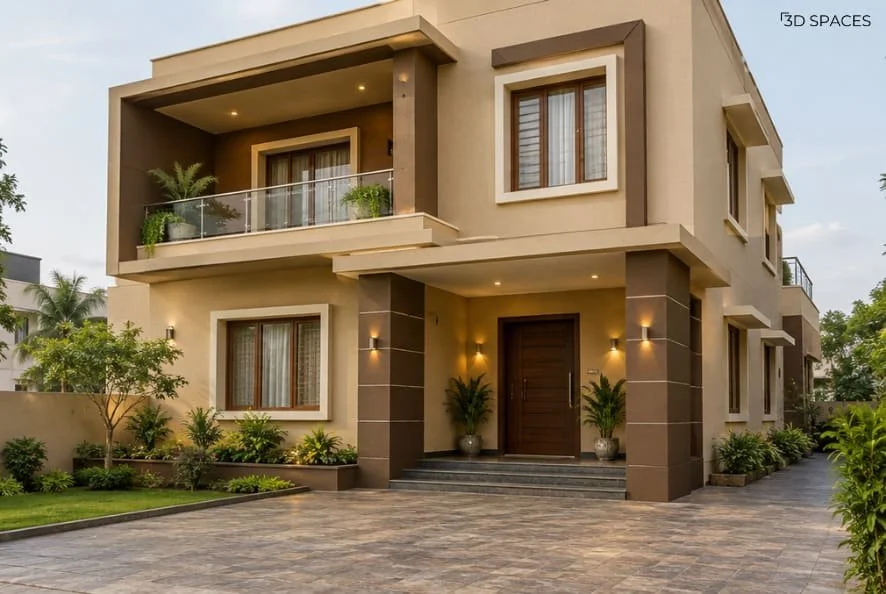
Sand beige and coffee brown add warmth and understated elegance to contemporary Indian homes and independent houses.
Suggested palette: Sand Beige #D6C2A3 and Coffee Brown #79614E
Sand beige and coffee brown creates a warm neutral exterior with slightly more depth than a traditional cream-and-brown palette.
This combination is useful when you want an elegant appearance without bright colours or strong contrast.
Where to apply the colours:
Main walls: Sand beige
Entrance columns: Coffee brown
Recessed balcony walls: Coffee brown
Window trims: Light cream
Best for: Urban independent houses and contemporary residences.
Design tip: Use coordinated paving and warm exterior lighting to reinforce the overall colour scheme.
7. Off-White and Olive Green
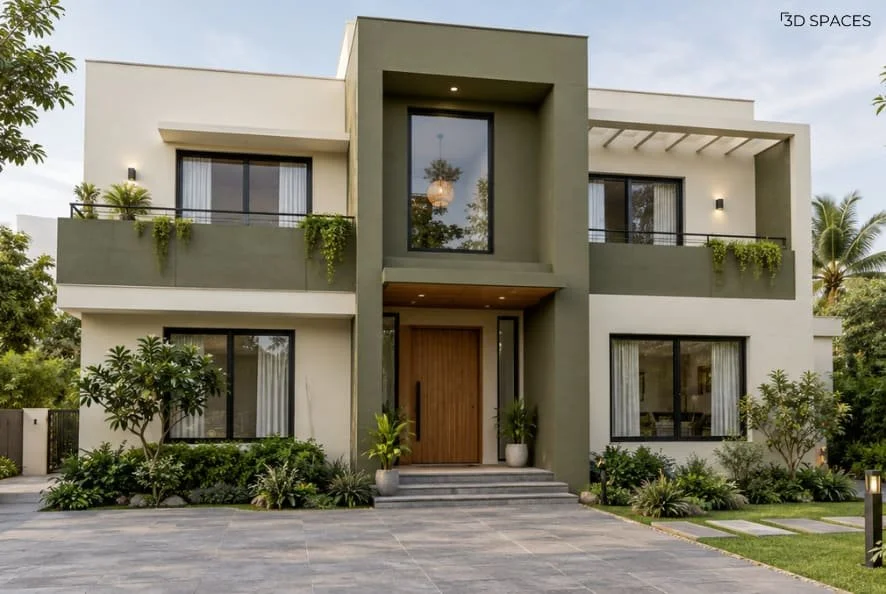
Off-white and olive green create a sophisticated exterior palette that complements modern villas, natural textures, and landscaped entrances.
Suggested palette: Off-White #F1EEE5 and Olive Green #777E58
Olive green and off-white is a stylish choice for homeowners who want a nature-inspired exterior with a modern feel.
The muted green introduces character while the off-white keeps the elevation bright and balanced.
Where to apply the colours:
Main walls: Off-white
Entrance feature: Olive green
Selected balcony panels: Olive green
Railings and windows: Black or dark bronze
Best for: Modern villas, bungalows, and houses with landscaped entrances.
Design tip: Combine olive green with warm wood-look cladding or natural stone for a richer exterior design.
8. Pale Yellow and White
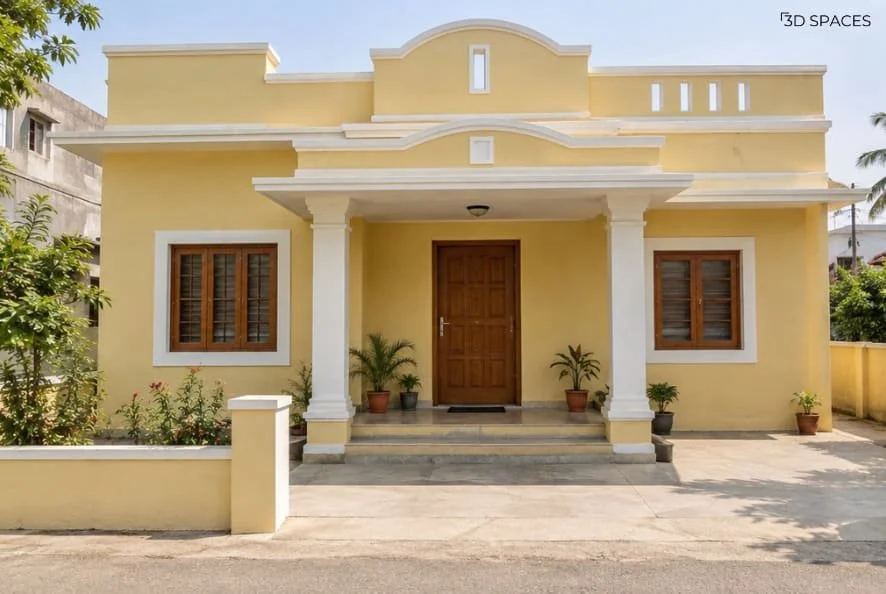
Pale yellow and white give traditional Indian houses a bright, cheerful, and welcoming exterior appearance.
Suggested palette: Pale Yellow #F2DE9A and Soft White #FAF7EF
Pale yellow and white creates a bright, welcoming appearance that can work beautifully on traditional Indian homes.
Unlike saturated yellow, a softer shade provides warmth without overwhelming the elevation.
Where to apply the colours:
Main walls: Pale yellow
Cornices and window borders: White
Entrance details: Soft white
Doors: Natural wood finish
Best for: Traditional houses, compact family homes, and heritage-inspired buildings.
Design tip: Check yellow paint samples under direct sunlight before finalising them. A shade that looks subtle indoors may appear much brighter outside.
9. Greige and Wood Accents
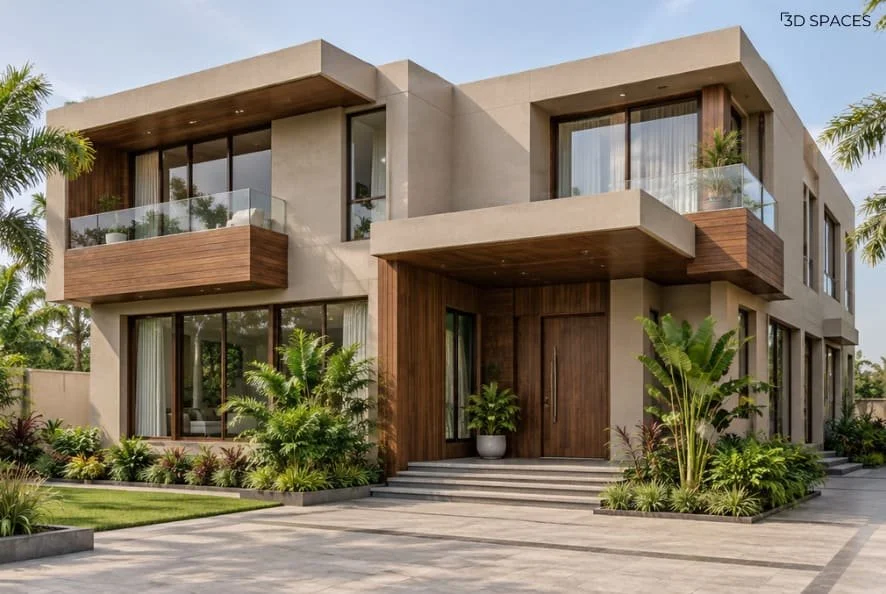
Greige walls and warm wood-look accents create a refined, minimalist exterior for luxury villas and premium duplex houses.
Suggested palette: Greige #B8ADA0 and Wood Brown #8C6548
Greige combines the warmth of beige with the sophistication of grey, making it suitable for minimalist residential architecture.
Wood-look accents add texture and visual interest without requiring several paint colours.
Where to apply the colours:
Main walls: Greige
Entrance feature: Exterior-rated wood-look cladding
Balcony projections: Light greige
Window frames: Dark bronze or black
Best for: Modern luxury villas and premium duplex houses.
Design tip: Use exterior-rated cladding materials designed for UV exposure, moisture, and temperature changes. Interior laminates should not be used outdoors without confirmed suitability.
10. Peach and Cream
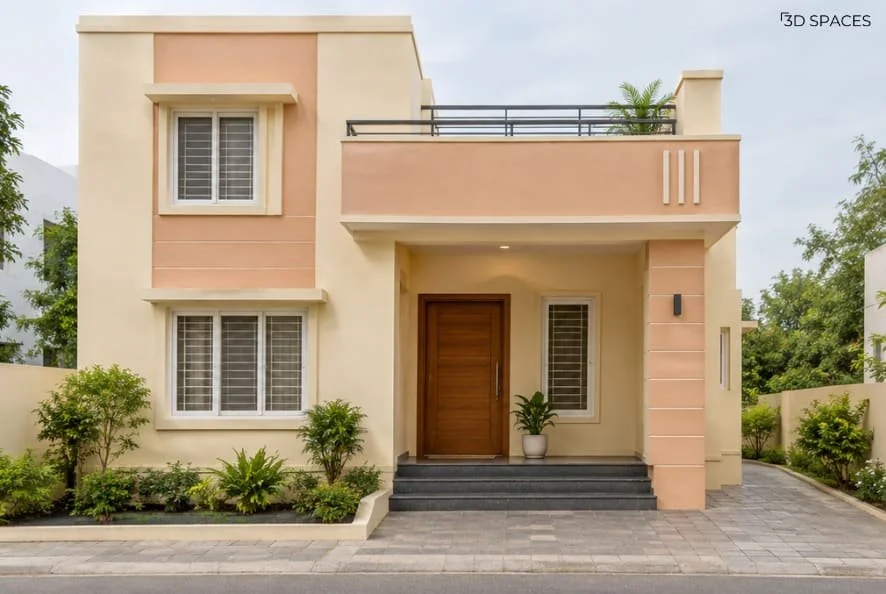
Muted peach and cream add a soft, inviting touch to compact Indian houses without overwhelming the exterior design.
Suggested palette: Muted Peach #E5B9A7 and Cream #F4E8D4
Peach and cream is an attractive option for homeowners who prefer warmer, softer exterior colours.
A muted peach can add personality to a compact house without creating the strong visual impact of bright orange or red.
Where to apply the colours:
Main walls: Cream
Entrance or balcony feature: Muted peach
Window trims: Light cream
Door: Warm brown
Best for: Compact independent houses and traditional residential elevations.
Design tip: Choose dusty peach shades rather than highly saturated pink-orange tones for a more understated appearance.
11. Navy Blue and White
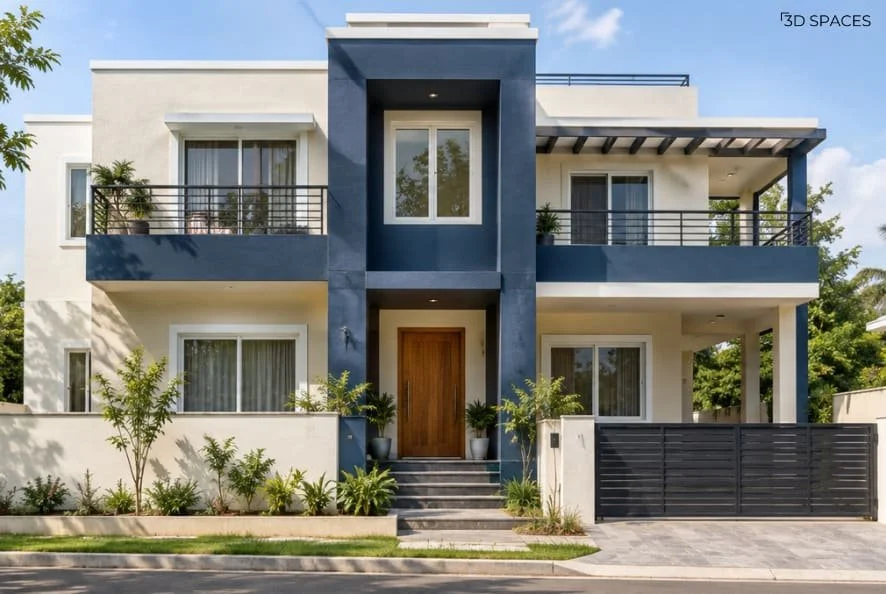
Navy blue and white create a bold, contemporary exterior colour combination for modern Indian homes with clean architectural lines.
Suggested palette: Navy Blue #2E435C and Warm White #F6F3EB
Navy blue and white creates a striking contrast that works well on homes with simple, defined architectural forms.
White balances the richness of navy blue and keeps the exterior from appearing excessively dark.
Where to apply the colours:
Main walls: Warm white
Entrance projection: Navy blue
Balcony feature: Navy blue
Window trims: White
Best for: Modern houses, contemporary villas, and coastal-inspired designs.
Design tip: Choose exterior paint with suitable colour-retention and weathering properties, particularly for surfaces exposed to strong sunlight.
12. Dusty Blue and Warm Grey
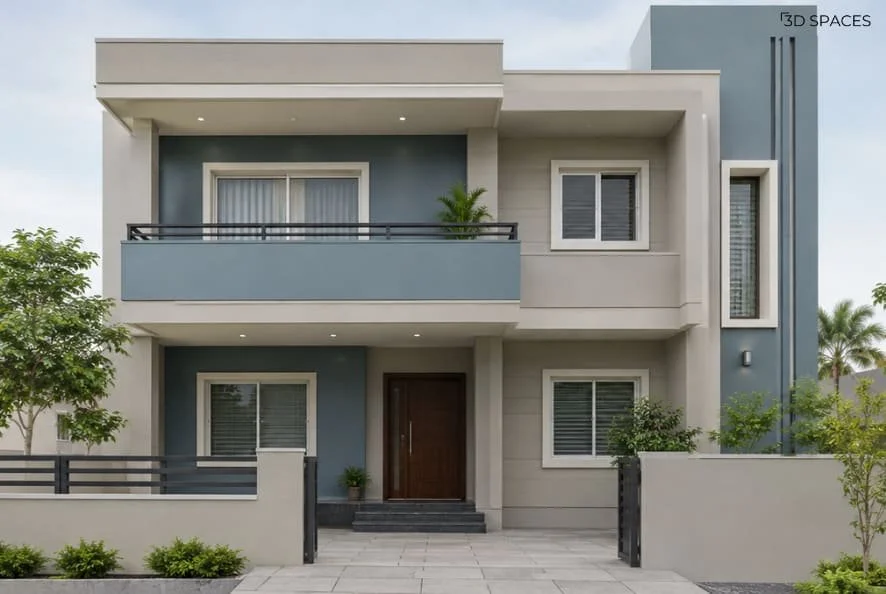
Dusty blue and warm grey bring subtle colour and modern sophistication to contemporary Indian duplexes.
Suggested palette: Dusty Blue #879EAA and Warm Grey #C6C1B9
Dusty blue and warm grey offers a softer alternative to the dramatic contrast of navy blue and white.
The combination is particularly useful for contemporary houses where homeowners want a distinctive but restrained exterior.
Where to apply the colours:
Main walls: Warm grey
Balcony panels: Dusty blue
Window borders: Off-white
Entrance door: Dark wood or charcoal
Best for: Contemporary duplexes and urban homes.
Design tip: Keep the colour transitions aligned with existing architectural edges rather than creating decorative divisions on flat walls.
13. Ivory and Brick Red
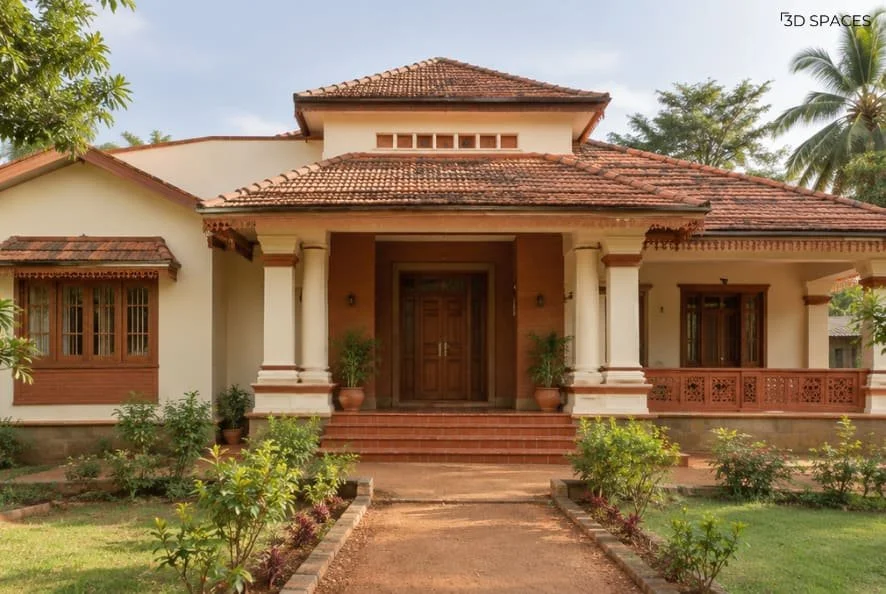
Ivory and brick red combine traditional warmth with architectural character for heritage-inspired Indian houses and courtyard homes.
Suggested palette: Ivory #F0E5D2 and Brick Red #A65342
Ivory and brick red creates a classic exterior inspired by traditional Indian building materials.
Brick red can add warmth and definition to an otherwise light façade.
Where to apply the colours:
Main walls: Ivory
Entrance surround: Brick red
Decorative borders: Muted brick red
Roof or cladding: Complementary earthy tones
Best for: Heritage-inspired houses, traditional villas, and courtyard homes.
Design tip: Consider exterior-rated brick or brick-look cladding where appropriate for added texture.
14. Taupe and Charcoal
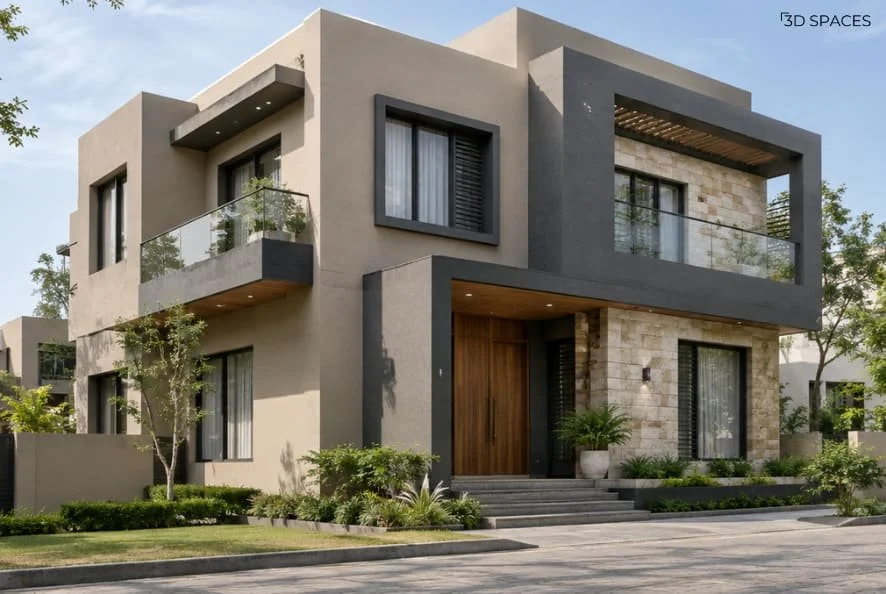
Taupe and charcoal create a refined, premium exterior colour scheme for modern independent houses and contemporary residences.
Suggested palette: Taupe #A79A8D and Charcoal #414345
Taupe and charcoal creates a sophisticated exterior with a muted, contemporary appearance.
Taupe provides warmth, while charcoal adds depth and highlights architectural features.
Where to apply the colours:
Main walls: Taupe
Entrance wall: Charcoal
Balcony projections: Charcoal
Window frames: Matte black
Best for: Premium duplexes and modern independent houses.
Design tip: Introduce a lighter accent or natural stone where necessary to prevent the elevation from appearing too dark.
15. Warm White and Muted Bronze
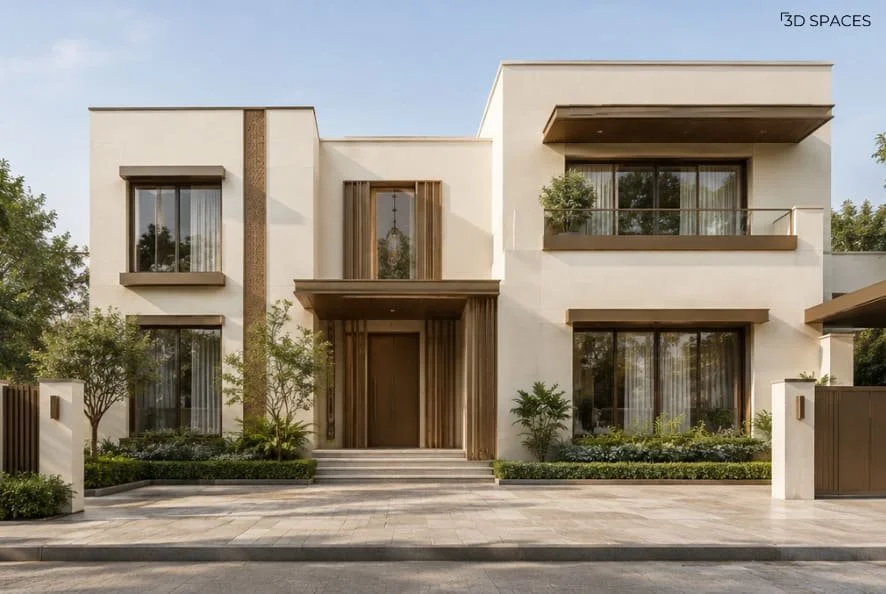
Warm white and muted bronze add understated luxury to minimalist villas through subtle accents and elegant exterior detailing.
Suggested palette: Warm White #F4F0E7 and Muted Bronze #92785C
Warm white and muted bronze is an elegant exterior combination for minimalist luxury houses.
The warm white keeps the façade clean, while bronze
FAQs
-
Neutral tones like beige, white, and grey are popular for Indian exteriors as they provide elegance and resist heat effectively.
-
Cream and brown, white and blue, and grey and white are among the best combinations that balance tradition and modernity in Indian homes.
-
Light shades like off-white, beige, and light grey are ideal, as they reflect heat and maintain a cool temperature in India's warm climate.
-
Soft neutrals like cream, beige, or light grey are universally suitable for exteriors, offering both aesthetic appeal and functionality.
-
White is considered one of the most attractive house colours due to its timeless elegance and versatility with various architectural styles.
-
Earthy tones like sage green, and terracotta, and modern shades like charcoal grey are trending for exterior walls in 2026, reflecting a blend of nature and modern design.